
Environmental measurements
Post-completion measurements
Carrying out the investment itself or installing acoustic protections does not yet resolve the noise issue. Whether the facility actually meets environmental requirements is determined by the final outcome achieved after commissioning the installation, starting operation, or implementing protective measures.
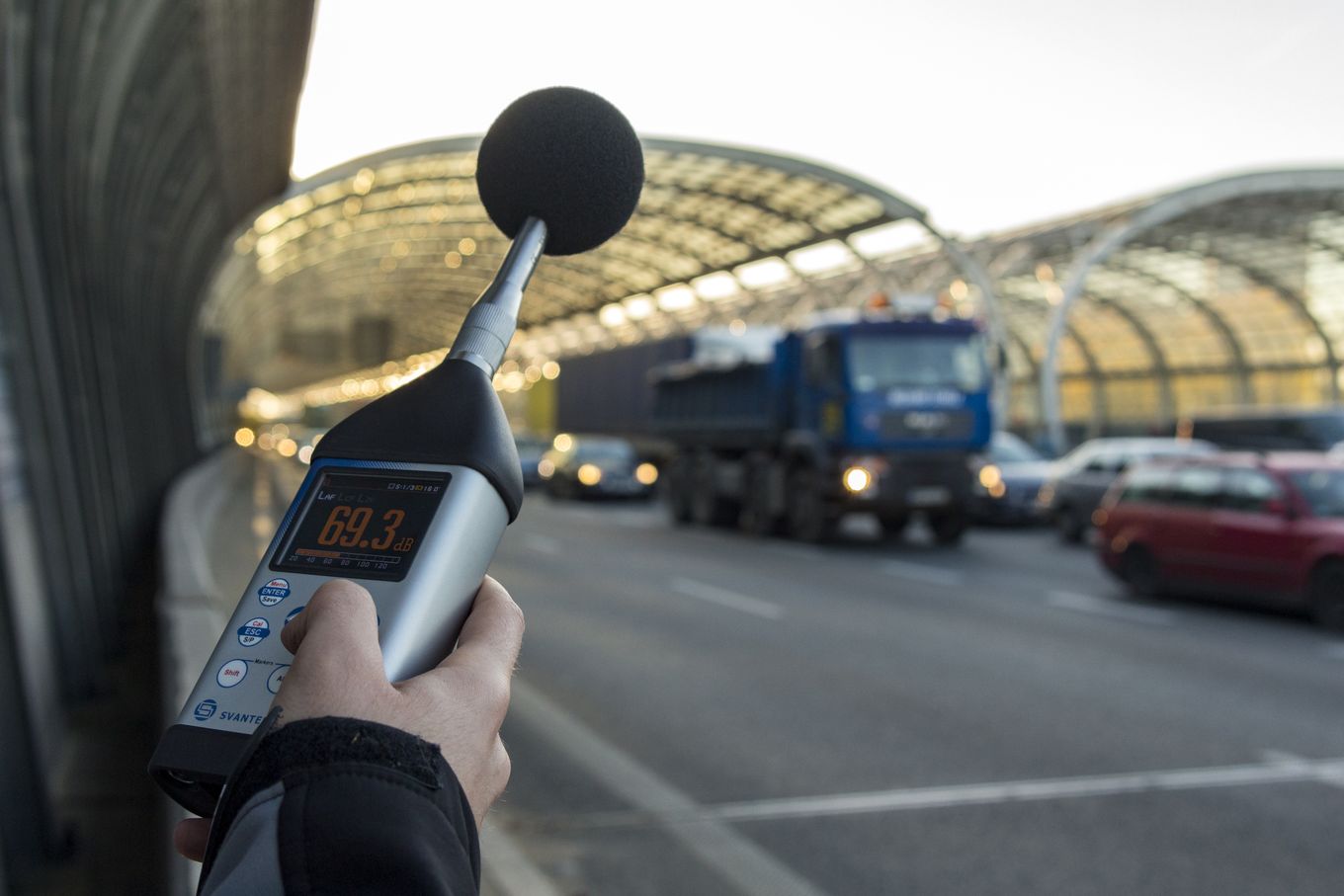
This is precisely when it is verified how the investment performs under real conditions and whether the solutions applied actually reduce noise emissions to the required level. In the Polish environmental protection system, both permissible environmental noise levels and methodological requirements for conducting measurements for installations and equipment apply.
Post-implementation measurements make it possible to precisely verify whether, after commissioning an investment or after applying silencers, barriers, enclosures, vibration isolation, or other acoustic protections, a real improvement has been achieved. This is a study that turns the project’s declared effect into objective engineering and formal data. Thanks to it, compliance with requirements can be confirmed, the effectiveness of the applied solutions can be demonstrated, and it can be indicated whether further corrective actions are needed. In practice, post-implementation noise analyses are still commissioned and carried out for infrastructure projects, as clearly shown by current public procurement procedures, e.g., GDDKiA from March 2026.
What are post-implementation measurements?
These are specialist studies carried out after completion of an investment, commissioning of a facility, start-up of equipment, or implementation of acoustic protection measures. Their purpose is to determine the actual level of noise impact once the facility enters the operational phase and whether the achieved effect corresponds to design assumptions, environmental decisions, and the requirements of applicable regulations.
This type of approach is particularly important because actual equipment operating conditions, local surrounding geometry, reflections, shielding, and the way a facility is used may differ significantly from the assumptions adopted at the design stage.
In practice, post-implementation measurements may concern both new investments and existing facilities where noise-reduction measures have been implemented. These include, for example, industrial plants, technical building equipment, ventilation units, refrigeration units, traffic noise sources, acoustic barriers, machine enclosures, silencers, or modified technological systems. Their value lies in showing the actual final effect, not only the predicted outcome from design documentation.
What exactly do we examine?
We analyze every situation in which, after commissioning an investment or implementing protection measures, the actual impact of noise on the surroundings must be checked. This includes noise emission from installations and equipment, the effectiveness of acoustic barriers, the performance of silencers and enclosures, the impact of technical upgrades, and the effect of organizational or operational changes.
Depending on the purpose of the study, we verify noise levels for daytime and nighttime periods, assess compliance with requirements for a given type of area, and check whether the applied protections actually deliver the intended effect.
Permissible noise levels for protected areas are specified by the applicable regulation, while requirements for measuring emissions from installations and equipment are set out in a separate methodological regulation.
In practice, such measurements are particularly important where an investment was approved on condition that specific protective solutions be applied, or where there was previously a risk of exceedances. This applies to both industrial and installation facilities, as well as transport or technical investments, for which the actual effectiveness of protective measures after commissioning is of key importance.
Why is this so important?
Post-implementation measurements are most often carried out at two key moments.
After commissioning the investment
When it is necessary to confirm that a new facility, installation, or infrastructure operates in accordance with environmental requirements and does not cause exceedances in acoustically protected areas. Such verification is particularly important when specific acoustic assumptions were adopted at the design stage or when the environmental decision, permit, or design analysis provided for the need to verify the effect after the start of operation.
After applying acoustic protections
When, after installing barriers, silencers, enclosures, acoustic treatment elements, vibration isolation, or after changing the way equipment operates, it is necessary to verify whether the problem has actually been reduced. Such measurement makes it possible to objectively confirm the effectiveness of the applied solutions and assess whether further corrections are necessary. This is particularly important when remedial actions were implemented in response to residents’ complaints, authority requirements, or earlier results indicating a risk of exceedances.
Methodology and reporting
In post-implementation matters, there is no room for guesswork. We conduct measurements in accordance with applicable legal and methodological requirements, taking into account the type of noise source, the nature of the investment, the protections applied, the function of neighboring areas, and the purpose of the study. In the case of noise originating from installations or equipment, the basis is the regulation on requirements for conducting emission magnitude measurements, whose consolidated text was published in 2023.
If the measurement concerns infrastructure projects, we also take into account the relevant procedures and requirements related to traffic noise and to post-implementation studies used in investment practice. Current public proceedings show that post-implementation noise analysis remains a real tool for verifying the effects of road investments also in 2026.
The final product of our work is a comprehensive report. It is not just a set of results, but a document containing technical and formal interpretation, an assessment of compliance with requirements, and engineering recommendations for further actions.
If the applied protections work effectively, the report serves as confirmation of the achieved effect. If not, we indicate which elements require correction and what further course of action will be most rational.
Start by confirming the effect
Do not assume that an investment or acoustic protections are operating in accordance with the design just because they have been implemented. Carry out post-implementation measurements and base decisions on objective data. You will receive a clear diagnosis, a report, and specific confirmation of whether the commissioned facility or the applied protective measures actually fulfill their function.
Post-completion measurements
Schedule post-completion measurements and check whether your investment or acoustic protection measures deliver real results under operating conditions.


Office / Showroom
Production / Warehouse
Let's do something together
Use the form - we will respond as soon as possible!