Environmental measurements
Environmental and formal documentation
In environmental proceedings, formal analyses, and acoustic studies, general assumptions or approximate data are not sufficient. Measurements are needed to provide a reliable basis for preparing documentation, assessing the impact of projects, and developing acoustic maps.
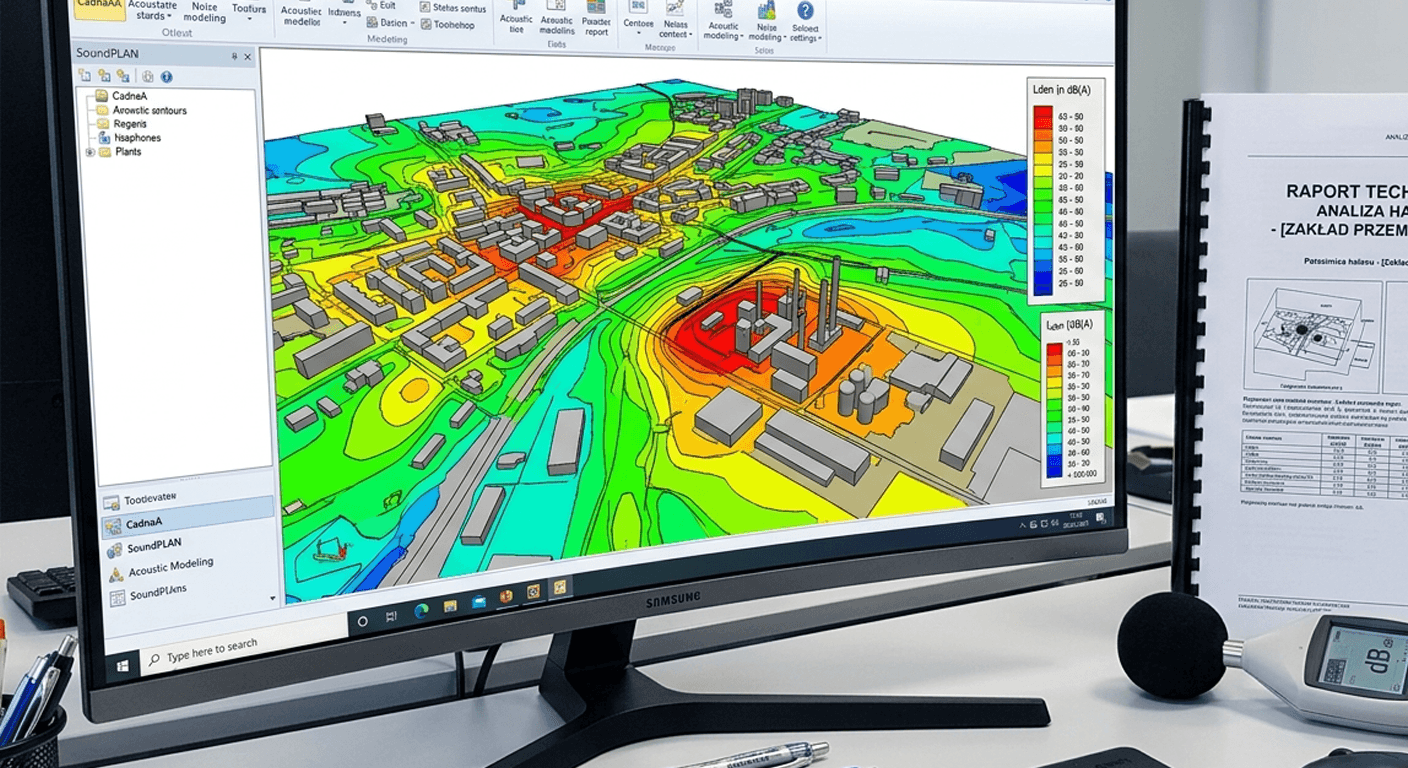
It is precisely these that make it possible to translate real field and operational conditions into material that can be used in administrative procedures, design analyses, and environmental studies.
We carry out measurements for environmental and formal documentation wherever noise must be reliably identified, described, and documented. This applies to both planned investments and existing facilities, installations, and transport infrastructure. The results of such studies form the basis for preparing acoustic analyses, environmental documentation, studies for authorities, and acoustic maps showing the actual or forecast impact of noise.
What are measurements for documentation and acoustic maps?
These are specialized acoustic studies performed as input material for formal, environmental, and design reports. Their purpose is to provide reliable data for analyses that must be based not on assumptions, but on actual acoustic conditions present in the field or in the surroundings of a given facility.
In practice, such measurements are used when preparing environmental documentation, analyses for administrative proceedings, materials for decisions and agreements, as well as when developing acoustic maps.
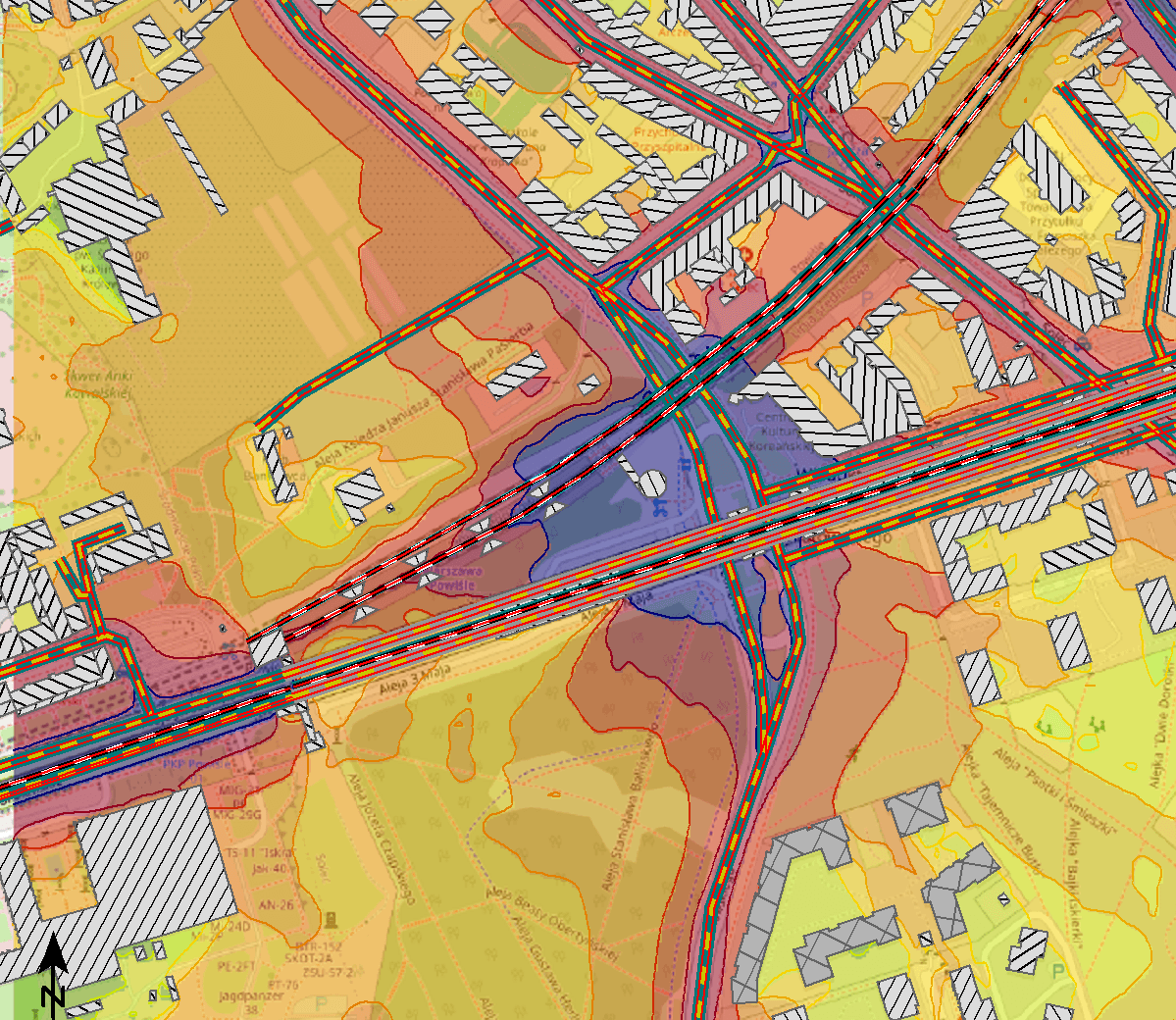
These may include noise emission maps, maps of a building’s or installation’s impact on the environment, as well as maps showing the influence of the acoustic environment on a building, plot, or planned development area. This also applies to analyses of noise emissions from roads, railway lines, tram lines, industrial plants, technical equipment, and other environmental sources.
What exactly do we study?
We conduct measurements wherever acoustic data are to become the basis for formal documentation or a calculation model. This includes, among other things:
acoustic background measurements,
traffic noise measurements,
industrial and installation noise measurements,
measurements of the impact of technical equipment on the surroundings,
measurements of the impact of the acoustic environment on an investment area or an existing building,
measurements for developing noise emission and propagation maps.
Depending on the purpose of the study, we examine conditions for daytime and nighttime periods, the local acoustic background, the nature of noise sources, and their relation to land use. This makes it possible to prepare not only a single measurement result, but full input material for further spatial, formal, and design analysis.
What are such measurements used for?
The main purpose of these studies is to provide data that can be used in environmental and administrative documentation and in acoustic mapping.
This service is particularly important when it is necessary to demonstrate the actual acoustic condition of an area, determine the impact of an investment, or prepare a reliable model of noise emission and propagation.
This type of measurement is used, among other things:
for environmental and formal analyses,
for documentation submitted in administrative procedures,
for preparing acoustic maps and impact maps,
for modeling the impact of a building or installation on the environment,
for assessing the impact of environmental noise on a building or planned development,
for analyses of noise emissions from roads, transport infrastructure, and technical facilities.
This is especially important because the quality of acoustic documentation directly depends on the quality of input data. If the starting point is incorrect or overly simplified, design, environmental, and formal conclusions may also be incorrect.
Why is this so important?
In environmental and formal documentation, it is not only the description of the investment that matters, but also the ability to demonstrate what its actual acoustic impact is or will be. Properly performed measurements make it possible to reduce the risk of incorrect assumptions, procedural problems, the need to supplement documentation, and disputes regarding the impact of noise on the surroundings.
They are also crucial when developing acoustic maps, because they make it possible to accurately represent the spatial distribution of noise and its relationship with buildings, protected areas, and technical infrastructure. Thanks to this, it is possible to show not only what noise occurs at a given point, but also how it spreads in space and which areas are covered by its impact.
Methodology and reporting
We conduct measurements in a manner tailored to the purpose of the study, the type of noise source, and the requirements of the documentation for which they are to be used. We take into account the specifics of the location, the nature of the sources, field conditions, and the function of the areas covered by the analysis. Thanks to this, the obtained data can provide reliable input material both for descriptive environmental reports and for calculation models and acoustic maps.
The final product of our work is organized measurement material and a report containing an interpretation of the results, a description of the study conditions, and conclusions useful for further preparation.
Depending on the scope of the order, these data may be used to prepare noise emission maps, maps of an investment’s environmental impact, maps of the impact of the acoustic environment on a building or plot, and other analyses required in formal and design procedures.
Start with reliable input data
Do not base environmental documentation and acoustic maps on approximate assumptions. Carry out acoustic measurements and base the analysis on data that truly describe the area, the noise source, and its impact. You will receive a reliable basis for further environmental, formal, and design studies.
Environmental and formal documentation
Arrange measurements for environmental documentation and acoustic maps, and prepare a study based on real data, not on assumptions.

Office / Showroom
Production / Warehouse
Let's do something together
Use the form - we will respond as soon as possible!