
Environmental measurements
Identification of noise sources in the environment
In practice, noise problems very rarely result from just one obvious source. In the surroundings of buildings and protected areas, different emissions often overlap: noise from technical installations, rooftop equipment, generator units, ventilation systems, industrial activity, internal transport, and sometimes also from other neighboring facilities.
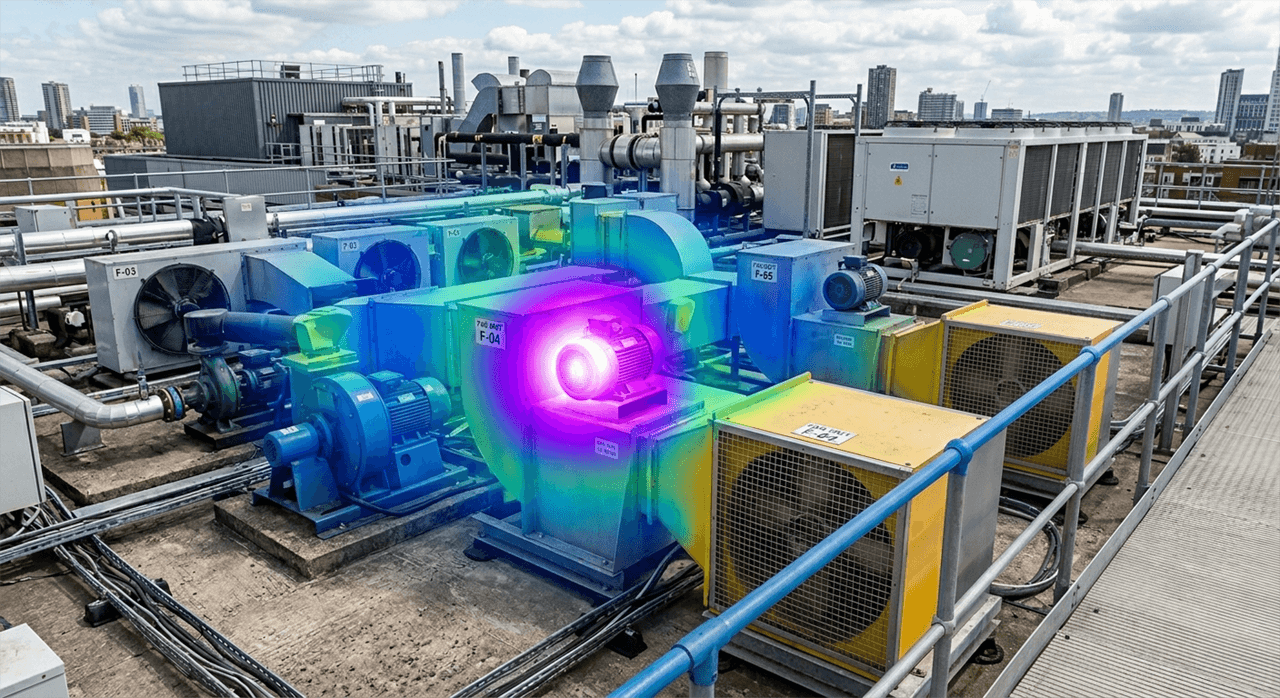
In such a situation, merely stating that “it is too loud” is not enough. First, it is necessary to determine which source is actually responsible for the problem and to what extent it affects the environment. The legal framework for noise protection in Poland stems from the Environmental Protection Law, which assumes the assessment of noise source impacts in relation to acoustically protected areas.
Identification of environmental noise sources makes it possible to precisely determine which devices, installations, or processes are responsible for acoustic nuisance.
This is a study that turns guesses and assumptions into objective engineering data. Thanks to it, it is possible to determine the actual mechanism of the problem, identify dominant emitters, and prepare effective corrective actions—instead of making costly and random decisions. In environmental matters, this is particularly important because, in Poland, reference measurement methodologies specified in the regulation on measuring emission levels apply to noise originating from installations or equipment.
What is noise source identification?
This is a specialized diagnostic service aimed at determining which source or group of sources is responsible for elevated noise levels in the outdoor environment. It covers both single emitters, such as units, fans, exhaust outlets, pumps, cooling towers, or rooftop equipment, as well as complex source systems operating simultaneously within one facility or in its vicinity.
In practice, we analyze not only the sound level, but also the operating characteristics of equipment, the time of impact, emission variability, dependence on operating mode, and the relationship between noise and the location of protected areas. This is especially important when several sources operate simultaneously and, without reliable diagnostics, it is difficult to indicate which one truly dominates. Source identification is therefore the first step toward a proper environmental assessment and effective noise reduction.
What exactly do we examine?
We analyze every situation in which it is necessary to determine where the noise really comes from. This applies to industrial and technical facilities as well as service, commercial, logistics, or residential buildings with extensive installations. Depending on the nature of the case, we identify the impact of ventilation and refrigeration equipment, pumps, air handling units, units, rooftop fans, technological processes, internal traffic, or other sources operating on the facility premises.
In practice, we verify which source has the greatest share in emissions, how its impact changes over time, and whether the problem is constant, periodic, or dependent on a specific operating mode. This makes it possible to move from a general complaint or doubt to a precise technical diagnosis. At a further stage, such a diagnosis may form the basis for assessing compliance with permissible noise levels specified for acoustically protected areas.
Why is this so important?
Noise source identification is most often carried out in two key situations.
When a problem appears, but it is unclear what is actually making noise
This is the most common case in resident complaints, neighbor disputes, or operational issues in technical facilities. In such situations, it is very easy to incorrectly indicate the guilty device or take action against a source that is not actually responsible for the main nuisance. Identification helps organize the situation and indicate the actual emitter.
When effective corrective actions need to be selected
Without identifying the dominant source, it is difficult to design a silencer, enclosure, barrier, organizational change, or adjustment of equipment operation in a truly effective way. Noise source identification helps avoid superficial actions and focus on the system element that actually generates the problem. This is particularly important in facilities where several installations operate simultaneously and only some of them require intervention.
Methodology and reporting
In diagnostic cases, there is no room for guessing. We work based on field measurements, analysis of local conditions, assessment of equipment operating modes, and interpretation of results in the context of the actual source layout. If the case concerns noise originating from installations or equipment, we take into account the reference measurement requirements arising from applicable regulations on measuring emission levels.
Depending on the situation, we analyze daytime and nighttime conditions, sound level variability, emission characteristics, and the coexistence of several sources. The goal is not only to perform a measurement, but above all to indicate which source is responsible for the problem and what its actual share is in acoustic impact.
The final product of our work is a report containing test results, technical interpretation, identification of dominant noise sources, and recommendations for further actions.
If the problem concerns environmental compliance, the report may serve as a basis for further formal assessment. If the goal is to quiet the facility, we indicate the most rational direction for technical or organizational actions.
Start with the right diagnosis
Do not guess which device, installation, or process is responsible for the noise problem.
Carry out noise source identification and base decisions on objective data. You will receive a clear diagnosis, a report, and concrete grounds for further technical, formal, and protective actions.
Identification of noise sources in the environment
Schedule an identification of environmental noise sources and find out what is really responsible for the acoustic nuisance in your facility or its surroundings.


Office / Showroom
Production / Warehouse
Let's do something together
Use the form - we will respond as soon as possible!