Acoustic measurements
Reverberation time measurements
Conference room, important meeting. For the first five minutes, everything sounds good. After fifteen minutes, voices begin to overlap, participants speak louder and louder, and hear worse and worse. The meeting turns into a tiring acoustic chaos. It’s not a matter of lack of focus. It’s pure physics and the problem of excessively long reverberation time.
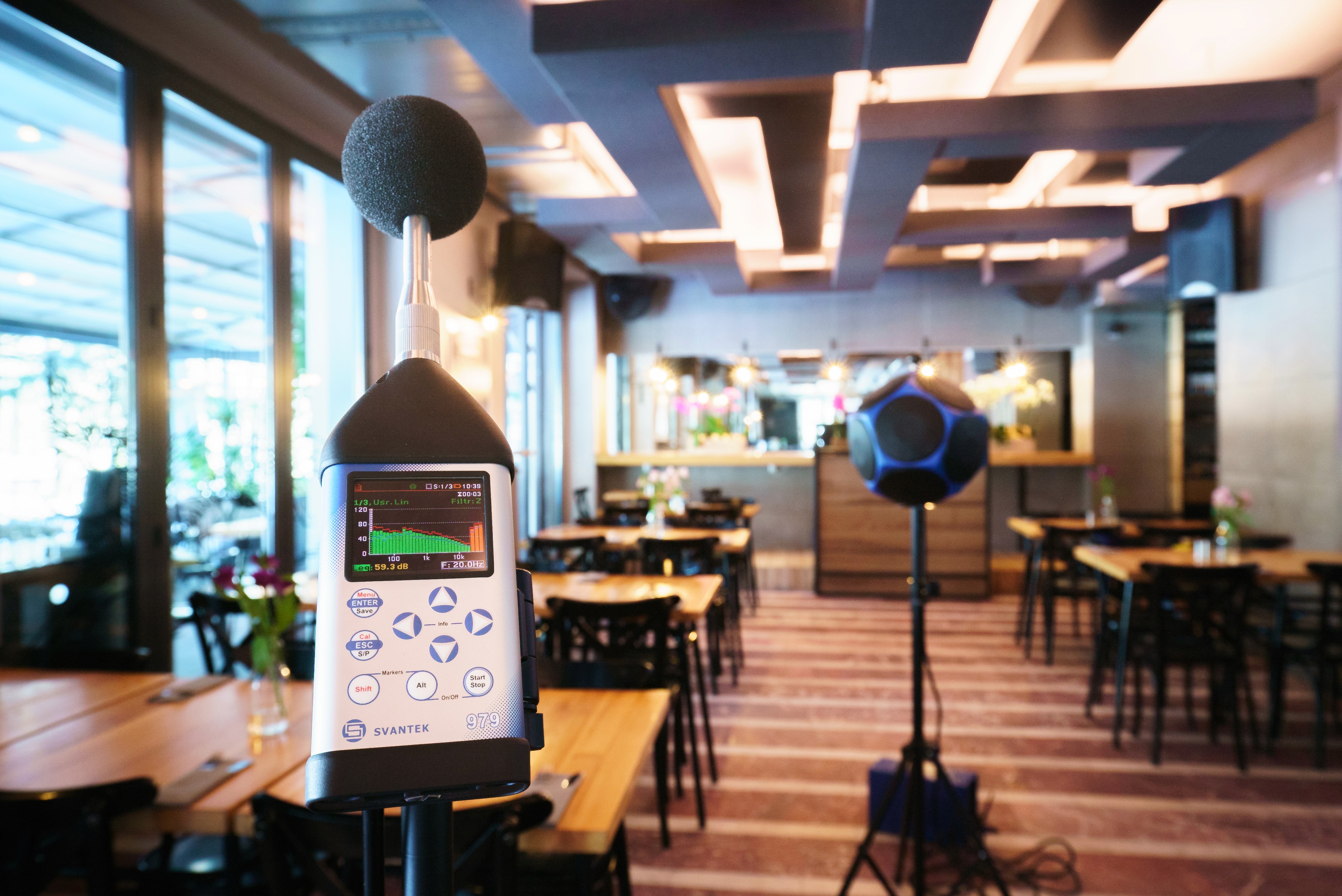
Reverberation time (RT60) is a key parameter that measures how long sound remains in a room after the source is turned off. It determines how many times the reflected wave overlaps with the next spoken word. If RT60 is too long, speech becomes muddy and participant fatigue increases dramatically. If it is too short, the interior sounds unnaturally "dry." At Nyquista, we measure this parameter to restore full functionality to your space.
One number is not enough. Why do we measure frequency-band characteristics?
Poor acoustics are rarely uniform. A room that "sounds good" to the human ear in the midrange of speech may have a serious problem with booming bass.
That is why we do not provide averaged results. We measure RT60 in octave or third-octave bands (from 125 Hz to 4000 Hz). This is crucial because standard acoustic panels absorb sound most effectively above 500 Hz. If your problem lies in the 125–250 Hz range, adding more panels to the wall will not help at all – it is money down the drain. A precise measurement tells us which acoustic treatment you truly need.
When do we perform RT60 measurements?
We operate where assumptions end and engineering begins:
Problem diagnosis (existing offices): Are users complaining about noise and headaches? Instead of buying panels "for testing," let us diagnose the interior. We will answer precisely: in which frequency band the problem lies and how to eliminate it at the lowest cost.
Project verification (handover of investment): The design assumed an RT60 level of 0.5 s. Did the contractor achieve it? Our measurement is the only objective proof, serving as the basis for accepting the space or requesting corrections.
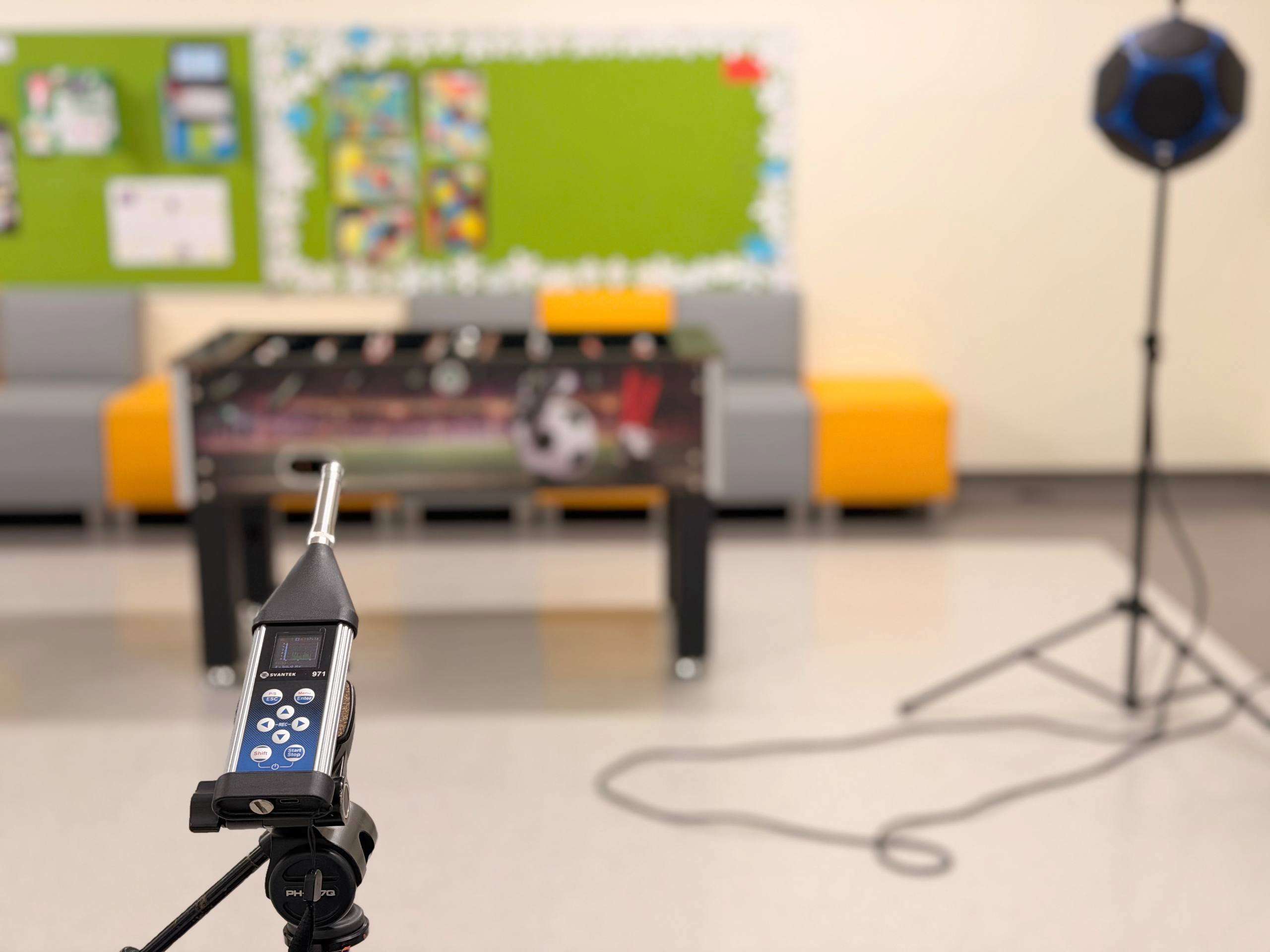
Adaptation design (baseline point "Zero"): Are you planning a refurbishment of a restaurant, school, or office? The baseline measurement is the foundation. Without it, we do not know how much sound-absorbing material to use or what type.
BREEAM / LEED / WELL certification: Green building systems take acoustic comfort very seriously. Our report is an official document confirming compliance with the criteria for your building.
The value of the report tailored to your role:
For the Facility Manager and Investor: We demonstrate that improving RT60 (e.g., to 0.4–0.6 s in meeting rooms) measurably improves productivity and reduces unreported employee absenteeism. The report is a hard business argument.
For the Architect and PM: The measurement report is a ready-made design matrix. We provide precise material guidelines: we indicate the product name from our offer, the required quantity, and the optimal installation location.
For Audio professionals: We conduct advanced diagnostics. We measure T20, T30 and EDT, determine the STI index (speech intelligibility), and report compliance with, among others, the EBU Tech 3276 standard.
How do we work? (Technology and Standards)
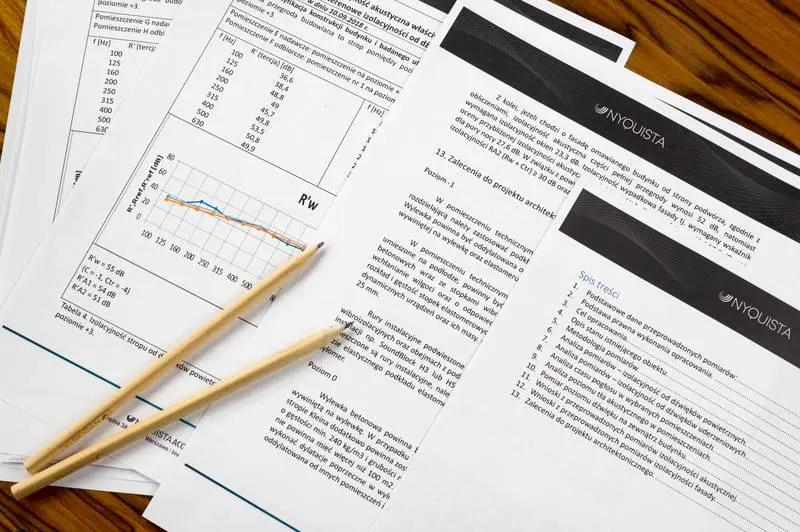
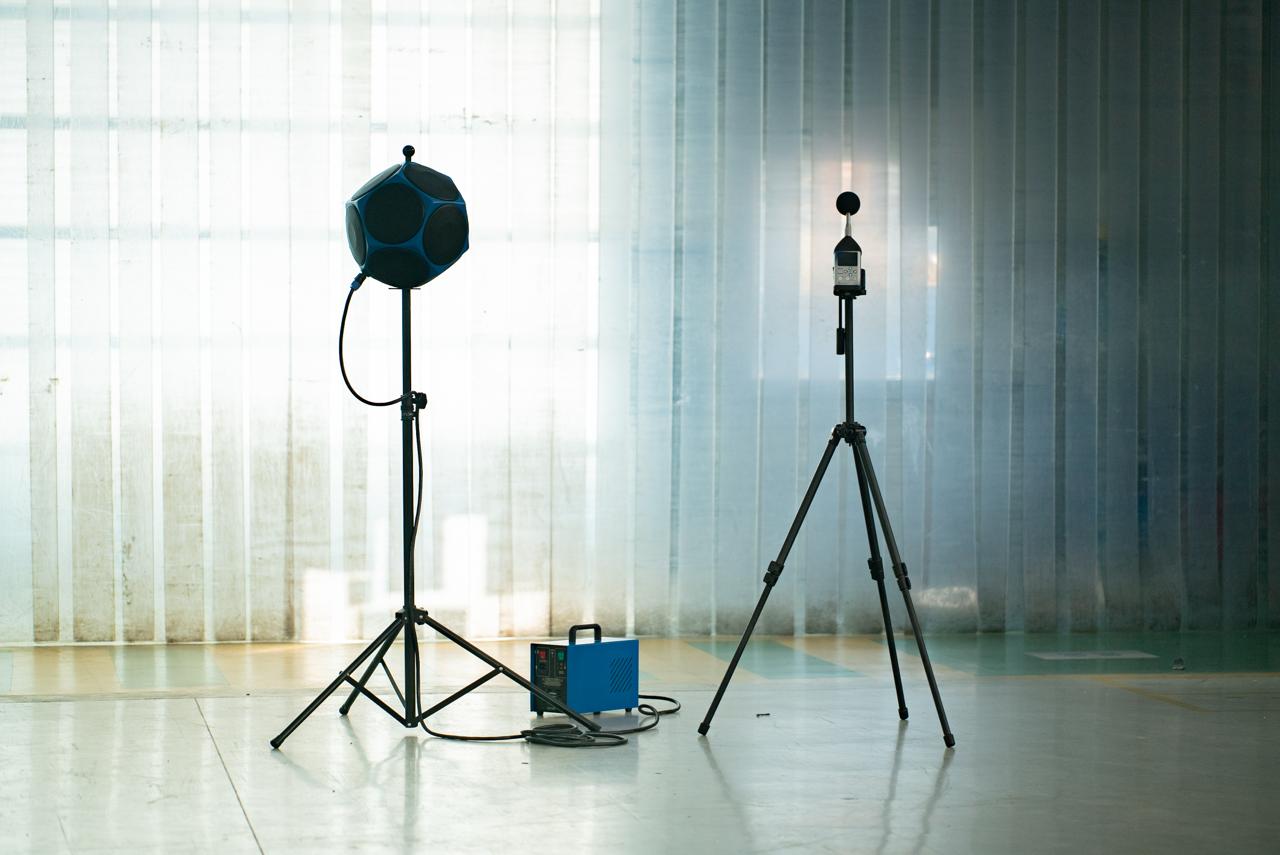
We do not believe in half-measures. Measurements are carried out using calibrated equipment of 1st-class accuracy, with reference, omnidirectional sound sources. Procedures are performed strictly in accordance with the ISO 3382 series standards and based on the Polish standard PN-B-02151-4.
You receive a comprehensive document from us. It is not just a set of charts, but a clear interpretation of the results, an assessment of compliance with requirements, and – most importantly – specific engineering recommendations.
Reverberation time measurements
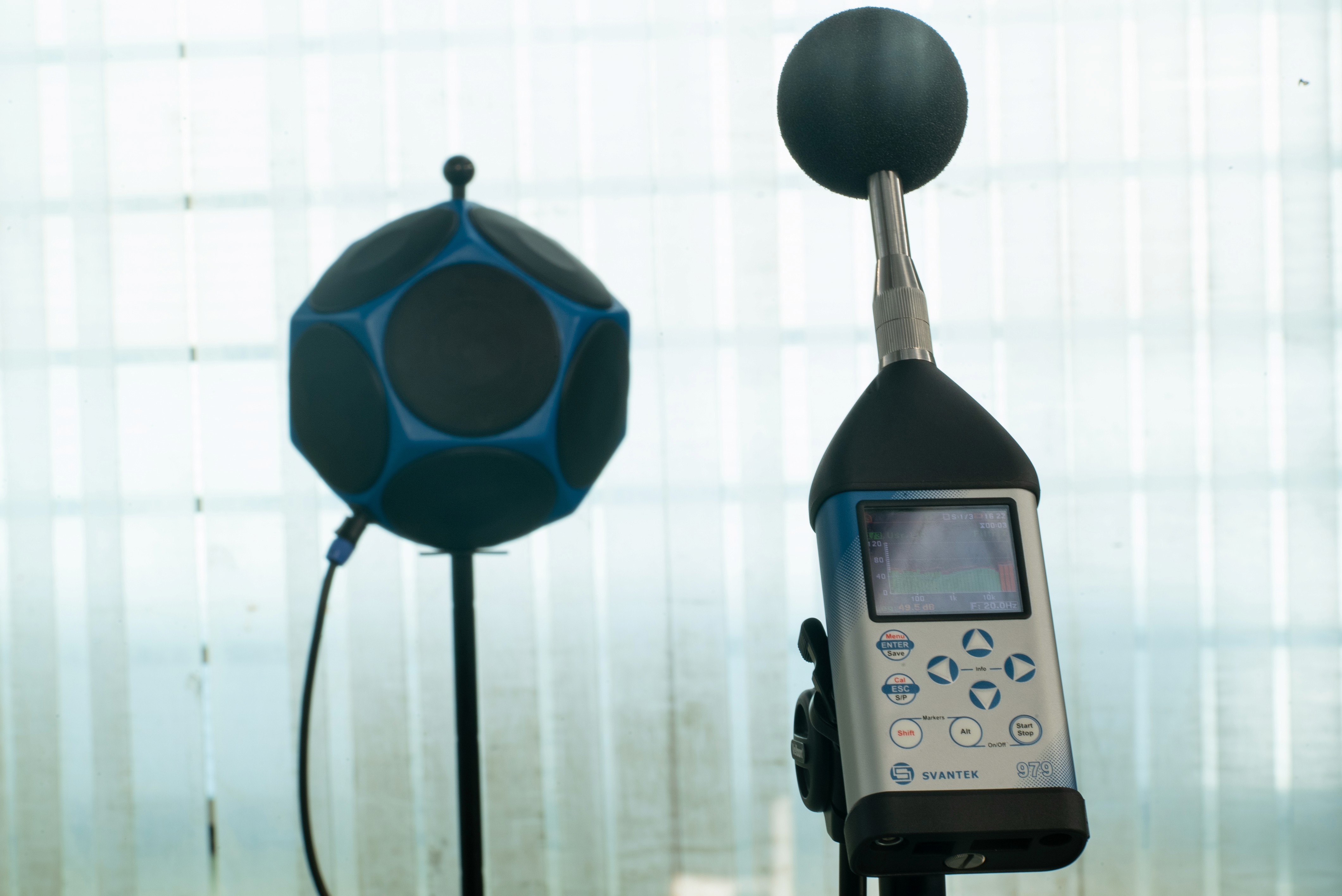
If the reverberation in your room is 1.2 seconds, every word overlaps with the next. This isn’t a matter of “comfort” — it’s a matter of whether your meetings make sense at all. Let’s measure it.

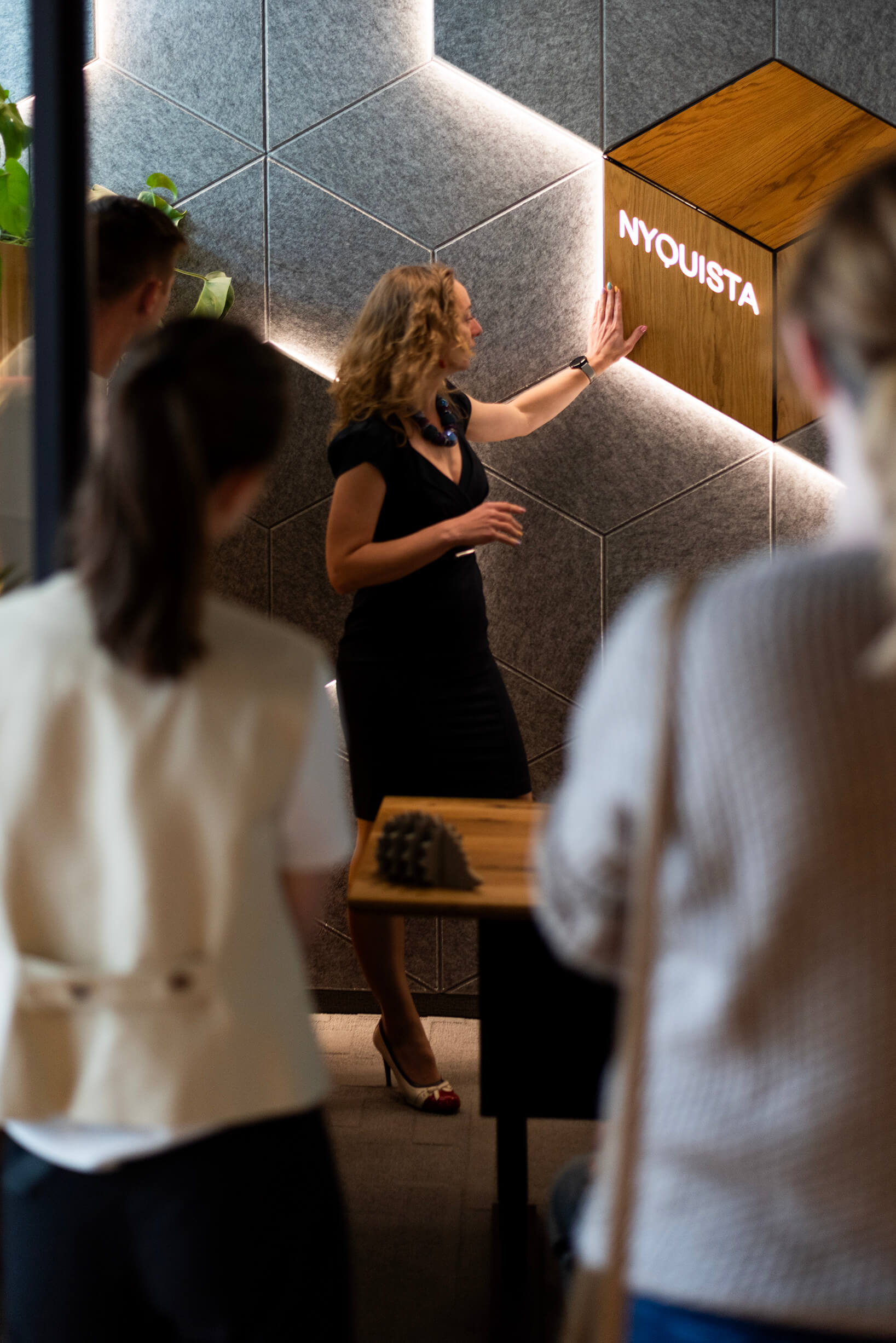
Office / Showroom
Production / Warehouse
Let's do something together
Use the form - we will respond as soon as possible!