Acoustic measurements
Determining the sound power level of technical equipment
The manufacturer of a powerful ventilation unit states in the technical data sheet L W L W = 68 dB(A). Reassured by this result, you install it on the roof of an office building or in a server room. After a week, it turns out that in the room next door, despite a thick wall, the noise makes work impossible. Where is the mistake? In blindly trusting laboratory conditions.
A regular measurement of sound pressure using a microphone does not describe the machine itself. It only describes the conditions at a given moment—distance, wall reflections, neighboring devices. Change the room, and the result changes.
The only hard, absolute parameter that characterizes how much acoustic energy a device emits is the sound power level (Lw). At Nyquista, we determine it under real operating conditions (in situ), without the need to move your equipment to an anechoic chamber.
When and why is this measurement necessary?
Determining the Lw parameter is the foundation of advanced acoustic engineering. We operate where guesswork ends:
Verification of manufacturers' "promises": A unit connected to rigid ducts, placed in the corner of a tight technical shaft, operates (and vibrates) completely differently than on a sterile factory test bench. We verify actual noise before final project acceptance, protecting you from costly claims.
Designing effective protections (No unnecessary costs): Are you designing an acoustic enclosure, a screen for heat pumps, or selecting a silencer? Without a precise
LW parameter, you are operating blindly. We determine exact power in frequency bands so you can choose an enclosure that actually works, not one that is simply "the most expensive and thickest."
Models for Environmental Reports: Environmental impact assessments (EIA) require hard input data. Our in situ measurement provides reliable numbers for noise propagation models, resistant to challenge by regulatory authorities.
What do we measure?
We diagnose the hearts of technical infrastructure:
Air handling and air-conditioning units (HVAC), powerful refrigeration units (chillers), transformer stations and heating substations, industrial machines and process lines, rooftop installations, and server rooms.
Our advantage: Measurements without stopping production
We adapt methodology to the harsh conditions prevailing at facilities. We apply engineering standards for in situ conditions (including ISO 3747, ISO 3744, ISO 3746).
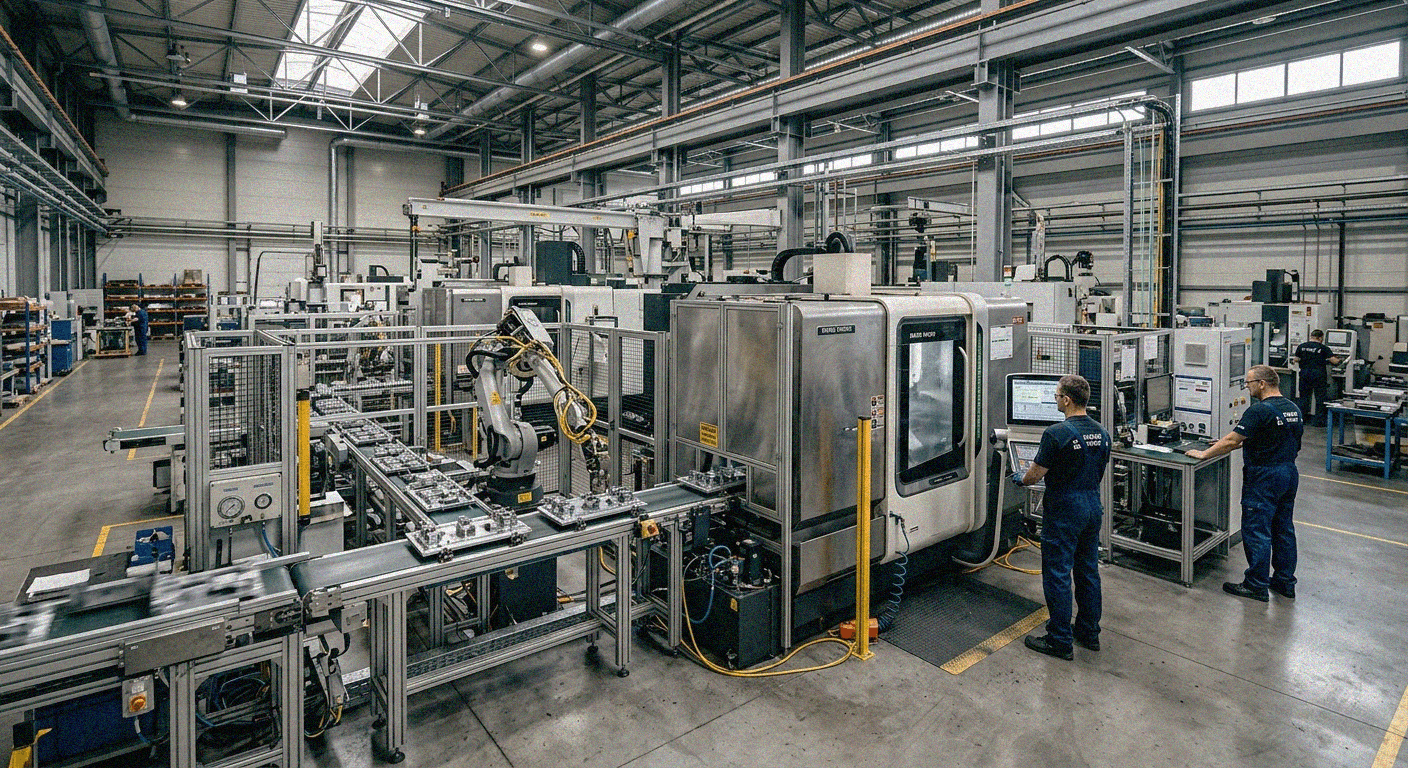
However, our greatest weapon in industrial environments is the sound intensity method (compliant with ISO 9614-1). Using advanced p-u probes, we can measure the power of a specific machine in a hall full of other noisy devices.
You do not need to switch off neighboring machines. You do not need to suspend production during the measurement. The probe isolates the tested source, ignoring powerful background noise. This is a technological game-changer.
Engineering report
The result of our work is a document that leaves no room for interpretation. You receive the calculated LW level (in frequency bands and as a single-number indicator), verification of the manufacturer's technical documentation, and hard input data for further silencer and screen design.
Determining the sound power level of technical equipment
Sound pressure level depends on where you stand. Sound power level is the physical truth about your device. At Nyquista, we deliver the truth.


Our design process
Step 1 — Gathering information
It only takes a short phone call, email, or a form on the website to start working together. Already during the first conversation, we preliminarily get to know your needs and arrange a convenient time for a meeting or a visit to your space. It's a simple step that paves the way to ideal acoustics.
See our solutions live
Office / Showroom
Production / Warehouse
Let's do something together
Use the form - we will respond as soon as possible!