|
Nyquista Team
Theoretically, reverberation is the gradual decay of sound energy after a sound source has ceased, caused by reflections of sound waves within an enclosed space, i.e., from the surfaces of walls, floors, ceilings, and objects located in the room. The human ear perceives reverberation as a sound prolonged for a specific duration, which leads to its reinforcement (amplification). Why does this happen? In an open space, such as a street, the wave decays with distance (by 6 dB with each doubling of the distance). In an enclosed room, however, this sound reflects multiple times off all flat surfaces and returns to us. The more reflections we have, the greater the reverberation in the room.
It is therefore important to remember that in enclosed spaces, both the direct sound wave and the waves reflected from all surfaces reach our ears from the sound source. They reach us with varying time delays, depending on the distance between our ears, the reflecting surface, and the sound source. This phenomenon is related to the echo effect – see how reverberation differs from the flutter echo phenomenon, but in that case, we can clearly hear the difference between the direct and reflected sound. With reverberation, on the other hand, all waves (direct and reflected) merge into one prolonged sound.
When there is high reverberation in a room, the sound decays very slowly. This creates what is known as reverberation noise. This means that a significant portion of the sound reaching our ears is reflected sound, rather than direct sound. Sometimes, under controlled conditions, reverberation is desirable. For instance, in a lecture hall, the speaker's voice should be audible at a great distance, even in the back rows. In such cases, a certain amount of reflection and natural sound reinforcement is beneficial. However, a problem arises when there are too many reflections and they do not distribute evenly throughout the room. This causes the lecturer's voice to become unintelligible, harsh, or fatiguing. In small spaces such as focus rooms, small to medium-sized conference rooms, or classrooms, a low level of reverberation is required. This ensures high speech intelligibility, making the sound precise and pleasant to perceive.
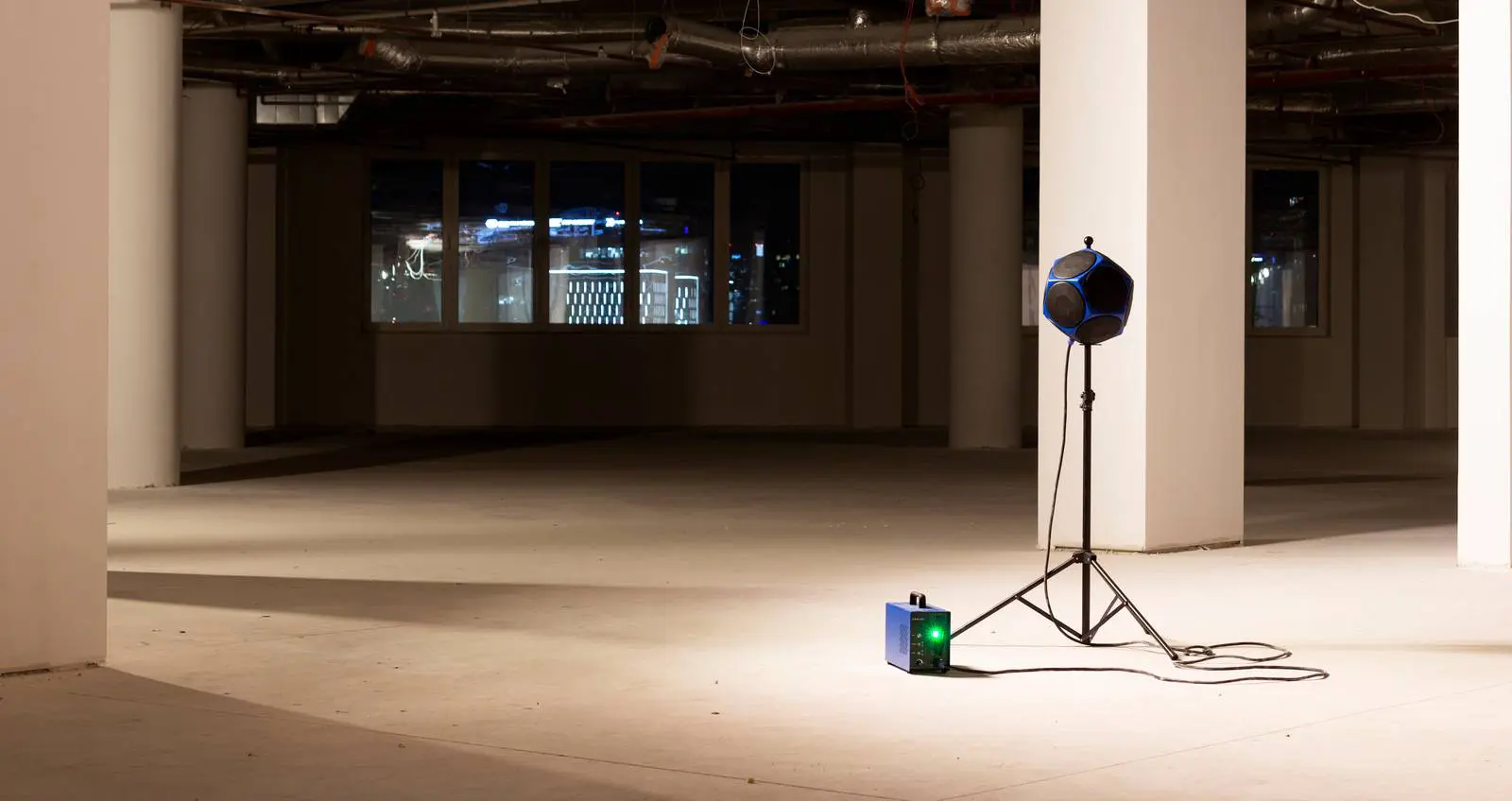
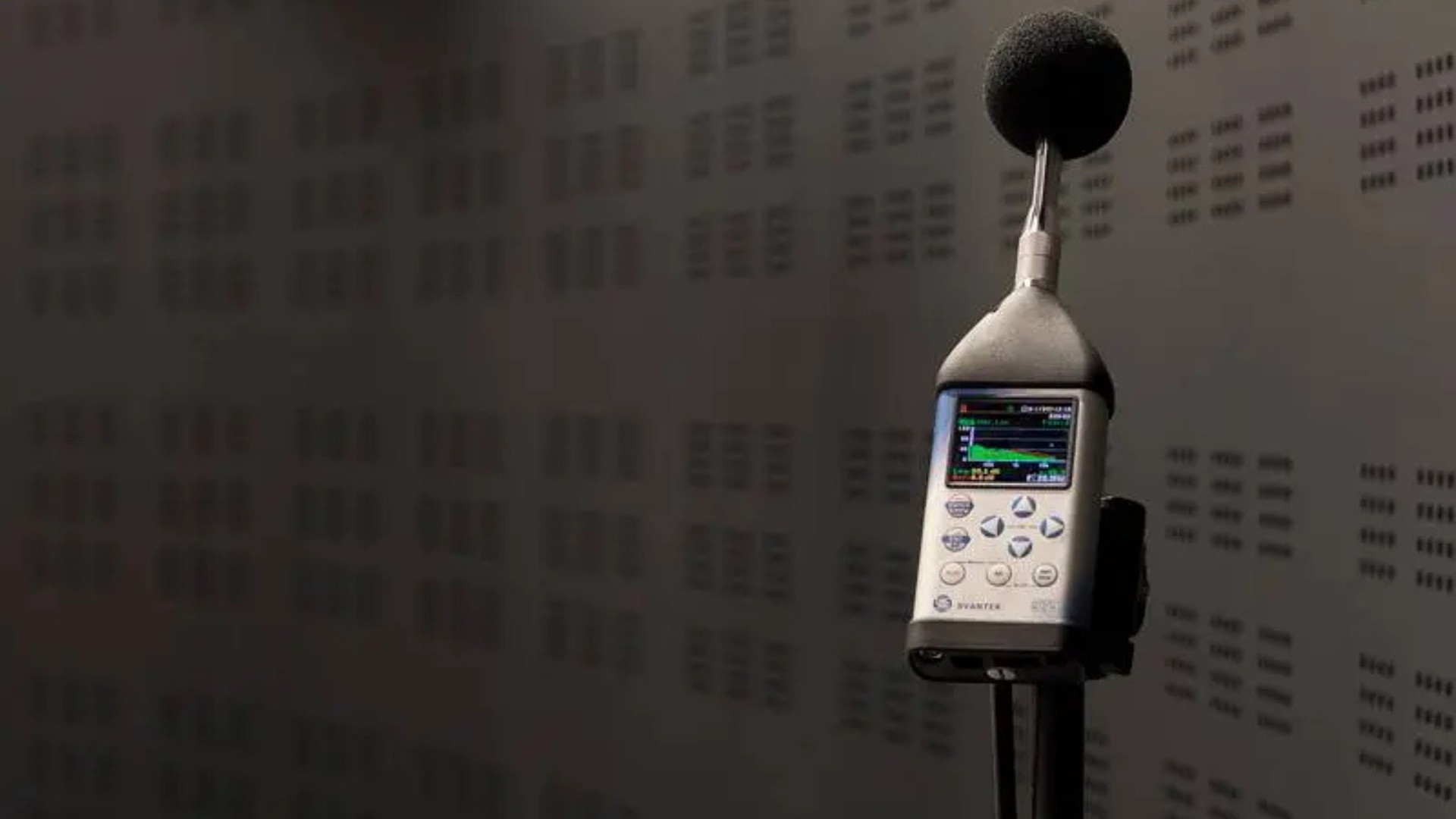
Reverberation in a room is measured using the reverberation time (RT). This is a fundamental parameter in architectural acoustics, and engineering reverberation time measurements allow for the precise determination of the time it takes for sound to decay in a given space. For example, the RT60 reverberation time is the period, in seconds (s), from the moment the sound source is stopped until the sound level decreases by 60 dB. Reverberation time depends on several factors, including: – room volume (as a rule, larger rooms have longer reverberation times) – the shape and proportions of the room (parallel walls, flat surfaces) – the amount of hard, reflective surfaces (glass panes, bare walls, porcelain tiles, stone, metal) – the quantity of sound-absorbing materials (acoustic ceilings, wall panels, carpeting) – the quantity of sound-diffusing elements (furniture, baffle ceilings, acoustic screens)

See also


Office / Showroom
Production / Warehouse
Let's do something together
Use the form - we will respond as soon as possible!