
|
Nyquista Team
Tuned bass traps are most commonly used in recording studios, listening rooms, home theaters, or auditoriums – anywhere high acoustic standards are required, and the goal is to achieve ideal listening and recording conditions.
Construction of a Tuned Membrane Bass Trap
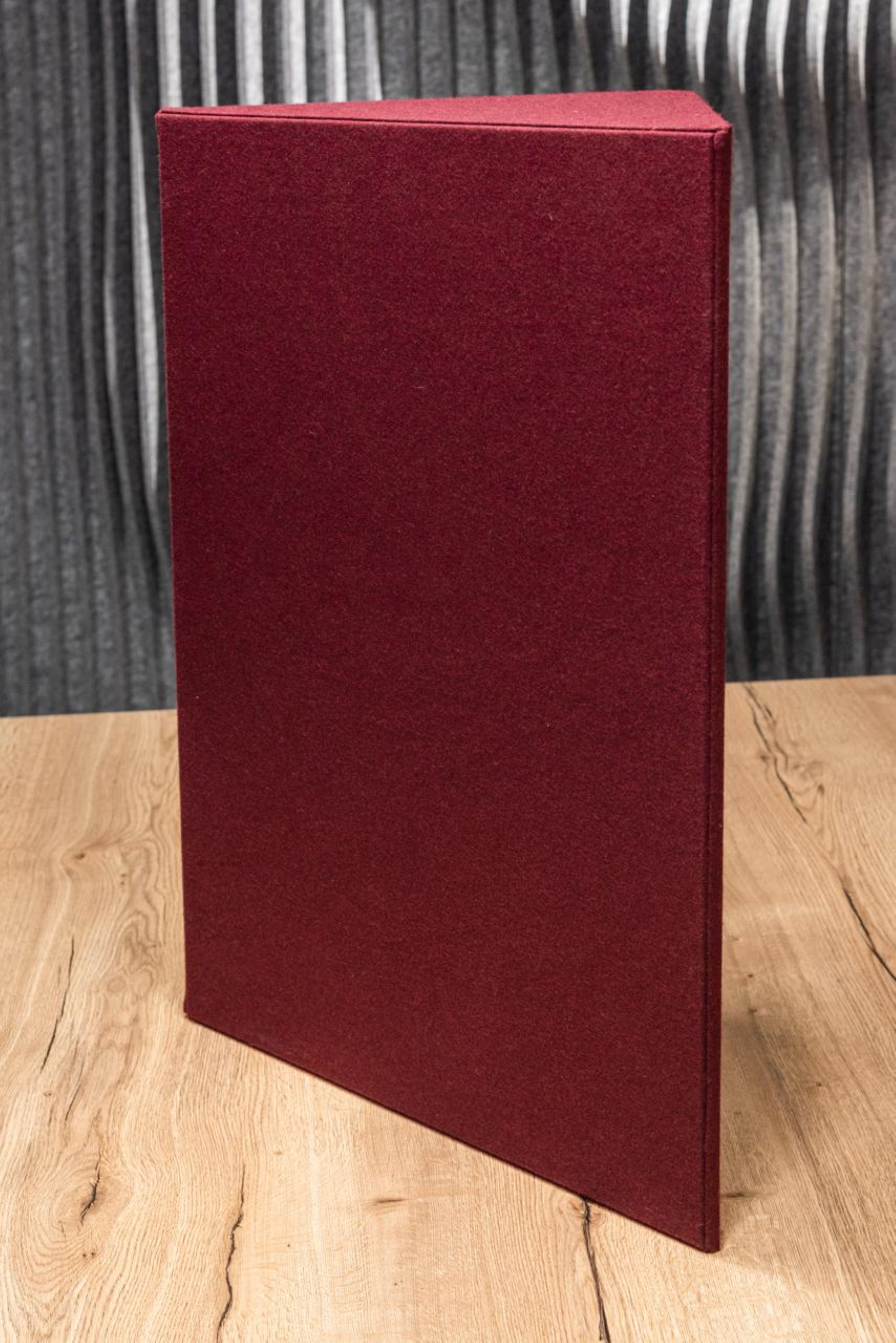
This acoustic treatment resembles a sealed, shallow box mounted on a wall or placed in a corner. It consists of four main components:
Rigid enclosure (frame): Usually made from a heavy and dense material such as MDF, plywood, or solid furniture board. The enclosure should be as rigid and airtight as possible to avoid energy losses due to uncontrolled airflow.
Front plate, commonly referred to as the membrane: This is the key element. It is a front panel made of plywood, fiberboard, or HDF. The membrane is mounted in a way that allows it to vibrate freely (responding to changes in the pressure of the acoustic wave).
Damping material: Inside the box, directly behind the membrane (but typically without direct contact to avoid blocking vibrations), mineral wool or acoustic wool of appropriate density is placed. The damping material increases the resonance damping, dissipating the acoustic energy within the chamber.
Air cavity: A free space of a specific depth inside the box. Together with the mass of the membrane, it forms a resonant system.
How does it work?
It is based on the physics of mechanical-acoustic resonance (a mass-spring system):
Mass and spring: The membrane acts as the mass, while the air enclosed within the sealed box acts as the spring.
Hitting the mark (Resonance): When a low-frequency sound wave (bass) strikes the trap, it causes rapid changes in pressure. If the frequency of the wave matches the resonant frequency of the trap, the vibration amplitude of the membrane reaches its maximum for a frequency close to the tuning frequency.
Capturing energy: At this moment, a portion of the acoustic energy is transferred to the membrane, setting it into vibration.
Conversion into heat (Damping): The vibrations of the membrane cause oscillatory changes in air pressure within the cavity, and the damping material increases energy losses through friction and viscous effects. The sound wave becomes "trapped" and dissipated, which significantly limits the occurrence of resonance and boominess.
The frequency the trap is designed to target
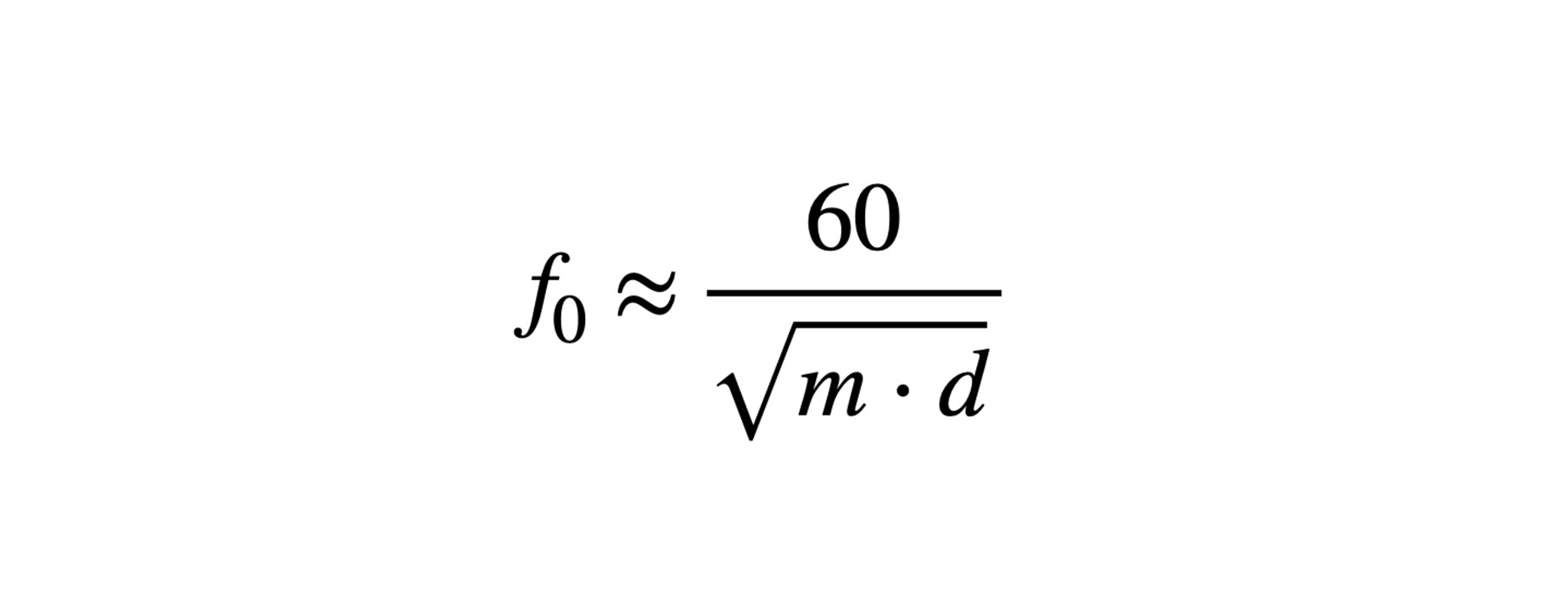
Depends on two main parameters: the surface mass of the membrane and the depth of the box (air cushion). An approximate formula is often used to estimate the tuning frequency:
Where:
m – mass of the membrane in kg/m2
d – depth of the air cavity in meters
Why use a membrane bass trap?
Standard porous materials (e.g., acoustic foams) would need to be very thick, often several tens of centimeters or more, to effectively absorb sound at frequencies around 40–50 Hz. A tuned bass trap allows for high efficiency in the lowest registers with a relatively shallow treatment depth (often 10–15 cm is sufficient), acting surgically only where the problem occurs, without unnecessarily "over-damping" the high frequencies in the room.

See also


Office / Showroom
Production / Warehouse
Let's do something together
Use the form - we will respond as soon as possible!