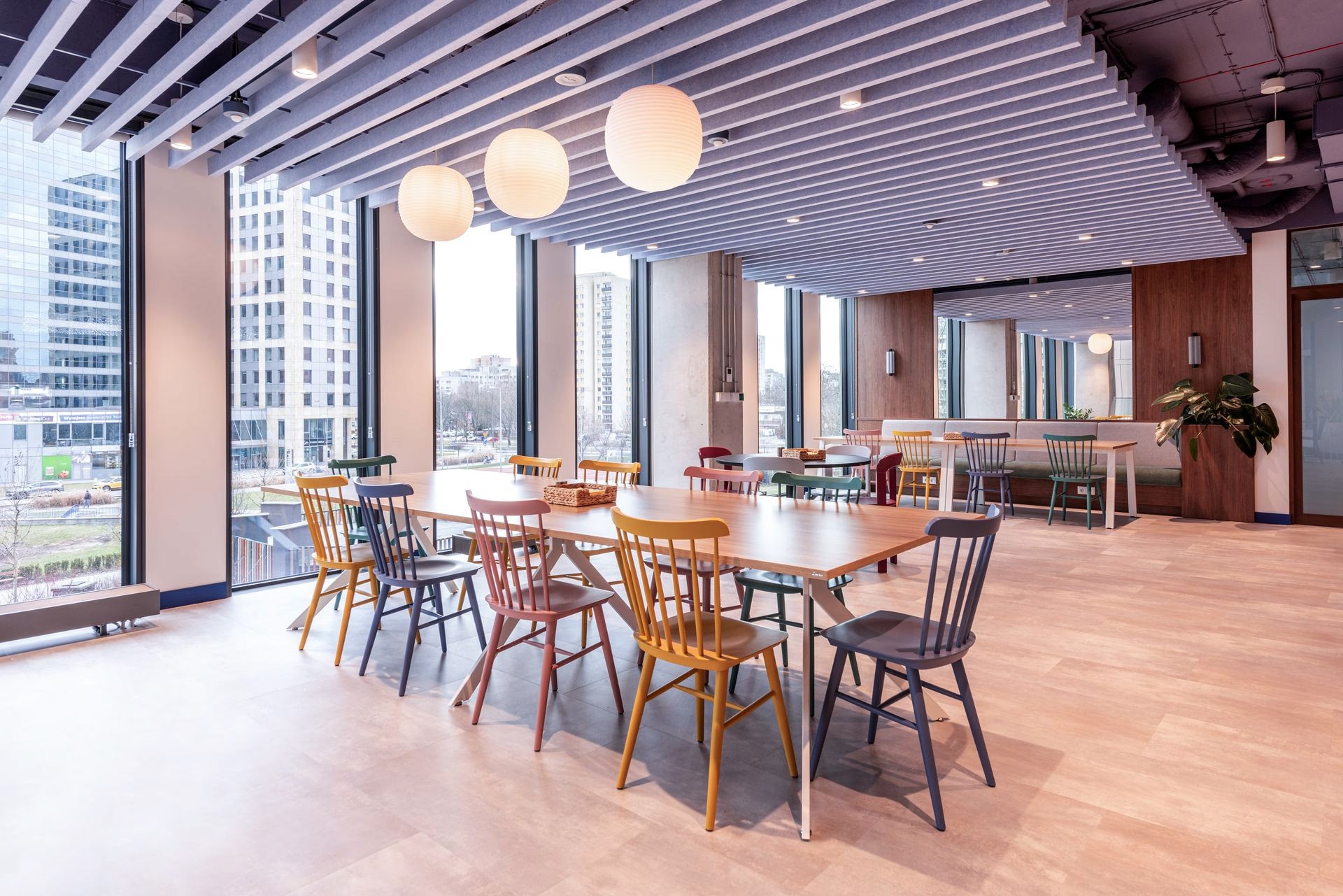
How does plastic waste become an advanced acoustic adaptation element? This transformation is pure engineering.
The architecture of industrial transformation
Before the material reaches the wall of an office building or a hotel lobby in the form of a precisely cut panel, it undergoes a rigorous technological process. Poland’s infrastructure is exceptionally strong in this sector. Domestic processing plants convert thousands of tons of baled packaging every year into rPET granulate dedicated to the construction sector. This is where physics begins.
The process of obtaining acoustic felt allows no quality errors. The collected raw material is first optically sorted and then subjected to aggressive decontamination. The clean plastic is sent to mills, where it emerges as rPET flakes with an impressive purity level of 99.5%. Only from such a prepared base, through extrusion and melting, are microfibers produced. The final stage is thermal needling – the fibers are mechanically entangled and heat-bonded under pressure.
In this way, we obtain a rigid nonwoven material with a precisely defined density. The mathematics of this process is uncompromising: producing one square meter of panel requires only a few used bottles. Moreover, the chemical bond structure enables multiple reprocessing without any significant loss of acoustic or mechanical properties.
When the physics of sound meets design
For an interior architect, detail precision and design freedom matter. For an acoustics engineer – hard measurement results from anechoic chambers. Compressed recycled felt (rPET) is a material that perfectly combines both perspectives.
The domestic market now offers a broad range of solutions based on this raw material – from modular spatial forms, through large-format wall claddings, to advanced product lines such as our EcoLine panels. For appropriately selected parameters (density, thickness, distance from the wall), the absorption coefficient in the human speech frequency range can exceed 0.8. This means a drastic reduction in reverberation time in frequency bands critical for human speech. For open-plan spaces, conference rooms or restaurants, this is the difference between information chaos and an environment optimized for concentration.
Importantly, the polymer structure means that rPET absorbers do not absorb moisture, do not crumble, and demonstrate excellent dimensional stability.
The hard numbers: ROI and ESG reporting
An investor does not buy panels for the idea alone – they buy a solution to a specific problem that has to fit within the budget. Growing EU requirements, including the SUP (Single-Use Plastics) directive and the stringent ESG non-financial reporting standards, directly affect the commercial real estate (CRE) sector. Reducing embodied carbon is now a necessary condition for a building to maintain its market value.
The decision to use processed PET in acoustic adaptation translates into concrete business metrics. The table below illustrates how material parameters correlate with investment security:
Physics and material properties (rPET) | Direct return on investment (ROI) and construction process impact |
Recycled content (minimum 70%) | Measurable reduction in carbon footprint. This solution secures additional points in green building environmental certification processes (BREEAM, LEED). |
Fire reaction class B-s1, d0 | Full compliance with stringent fire safety regulations. The material does not drip or smoke, which allows legal installation in circulation areas. |
Ultra-light self-weight and density | No load on slabs or support structures. This guarantees a drastic reduction in transport costs and installation time on site. |
High acoustic absorption | Protection against tenant complaints about noise. An optimized working environment eliminates downtime and increases team efficiency. |
At Nyquista Acoustic Design, we do not guess how sound will behave in your facility. Before implementation, we measure the environment with intensity probes, calculate the demand for acoustic systems, and perform 3D simulations. The effective use of panels made from PET bottles proves that advanced sound engineering, attention to architectural detail, and responsible budget management are one precisely designed process.
See also


Office / Showroom
Production / Warehouse
Let's do something together
Use the form - we will respond as soon as possible!