Acoustic measurements
Airborne sound insulation measurements
The plasterboard partition wall looked great in the design. The manufacturer declared sound insulation at Rw = 52 dB. The design requirements were 50 dB. The margin seemed safe.
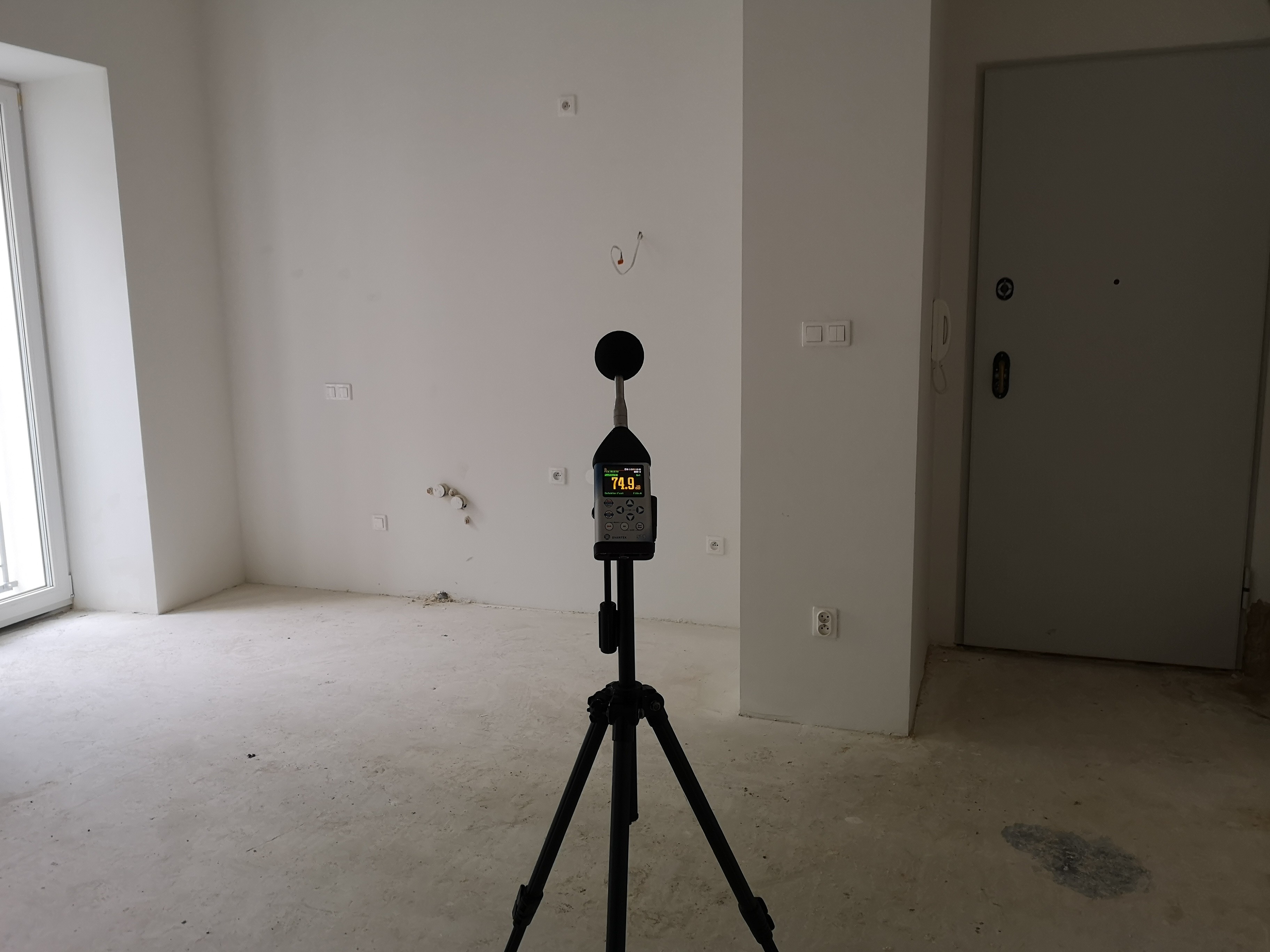
And then the building was commissioned. It turned out that the installer left a micro-gap near the ceiling, the profiles fit directly against the structural columns, and the electrical boxes were installed in the clear opening of the wall. The actual result dropped to R'w = 42 dB. The consequence? In the prestigious conference room, every word from the adjacent executive office is audible.
Measurement of airborne sound insulation is a verification of what no marketing brochure can predict: the quality of workmanship of the finished facility, its installation errors, and hidden sound transmission paths (so-called flanking transmission). At Nyquista, we do not take anyone's word for it – we verify the physics.

Rw vs. R'w – why is in-situ measurement necessary?
Many investors believe that purchasing a material with a high Rw parameter (laboratory rating) solves the problem. This is the most expensive mistake in acoustics.
The actual insulation in a building is represented by the R'w index (in-situ result). It is always lower than the laboratory result because sound in the real world seeks the easiest path – escaping through ventilation, ceilings, raised floors, and leakage. In-situ measurement evaluates what the user actually hears. Designing insulation solely based on product data sheets is asking for trouble.
Who is this assessment designed for?
We provide hard evidence for those who bear responsibility for the investment:
For the Developer and Investor: You officially confirm that the building meets the requirements of the PN-B-02151-3 standard and qualifies for handover. You gain an unassailable argument in the event of tenant complaints. You identify defects before closing the budget, before the costs of remediation become astronomical.
For the Architect and Interior Designer: You verify whether your partition concept worked in practice. The report protects you against investor claims and provides a basis for assessing the work quality of the general contractor. If the result deviates from the standard – you know precisely where the discrepancy lies.
For the Facility Manager: You respond to tenant complaints such as: "there is no confidentiality in this executive office." Our measurement localizes the problem and specifies a precise corrective solution. No more sticking random foams that will not stop the penetrating voice anyway.
When should you call our engineers?
Insulation measurements are essential at strategic points in the building lifecycle:
Technical handovers: Before handing over the building (or its redevelopment) for use.
Certification: Compiling the documentation required by BREEAM, LEED, or WELL systems.
Complaint diagnostics: When there is a lack of privacy in offices, hotels, medical practices, or law firms.
Remediation verification: After an acoustic intervention has been carried out, to confirm its effectiveness.
How do we work? (Technology and Standards)
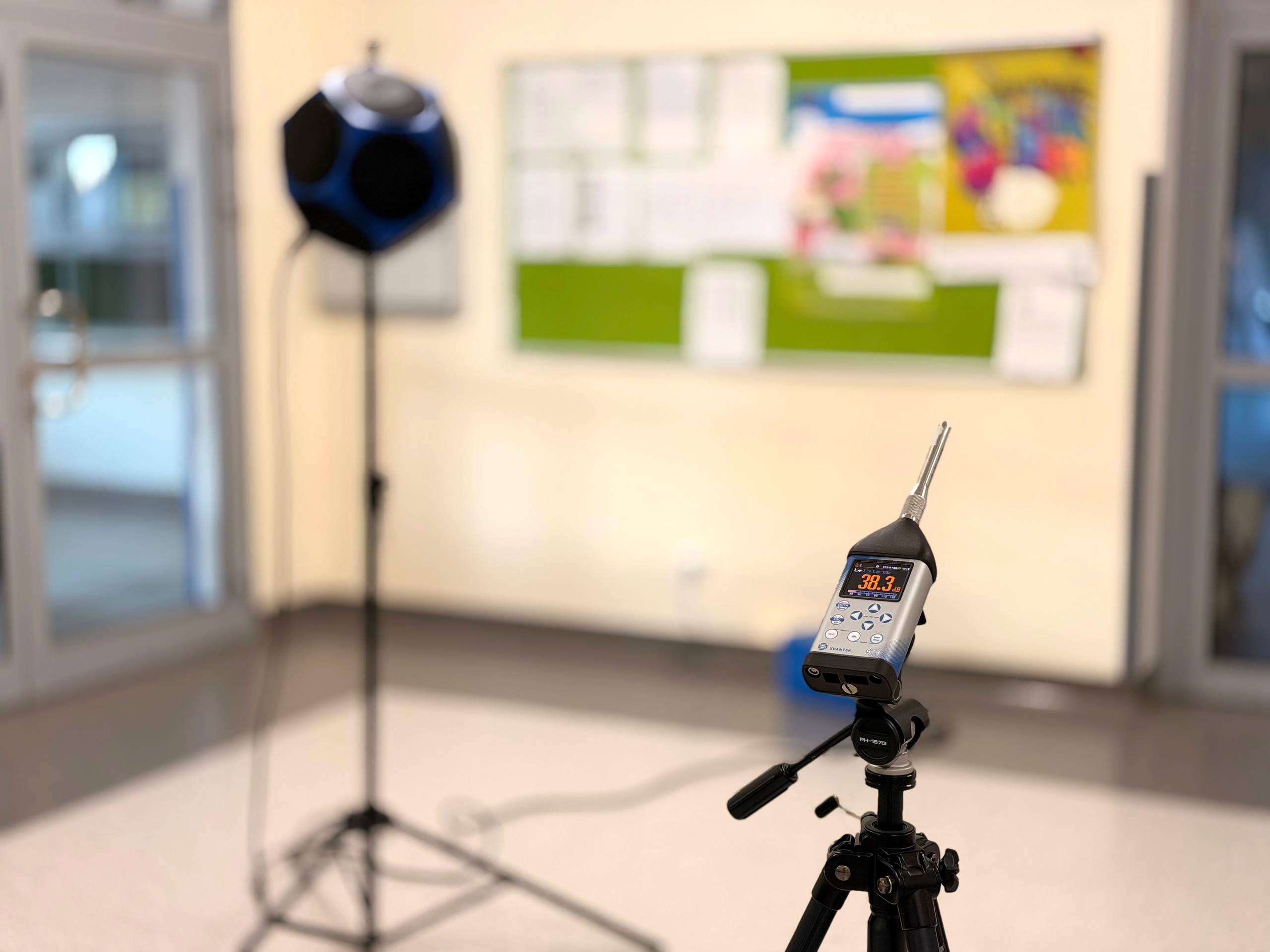
Our methodology is pure engineering. We conduct assessments using Class 1 accuracy equipment (regularly calibrated).
We base our procedures strictly on the ISO 16283-1 standard. We perform a full octave-band analysis in a wide range from 50 to 5000 Hz, determining the key R'w and DnT,w indices. We analyze not only the wall itself, but we also search for potential flanking transmission paths.
A report that solves problems
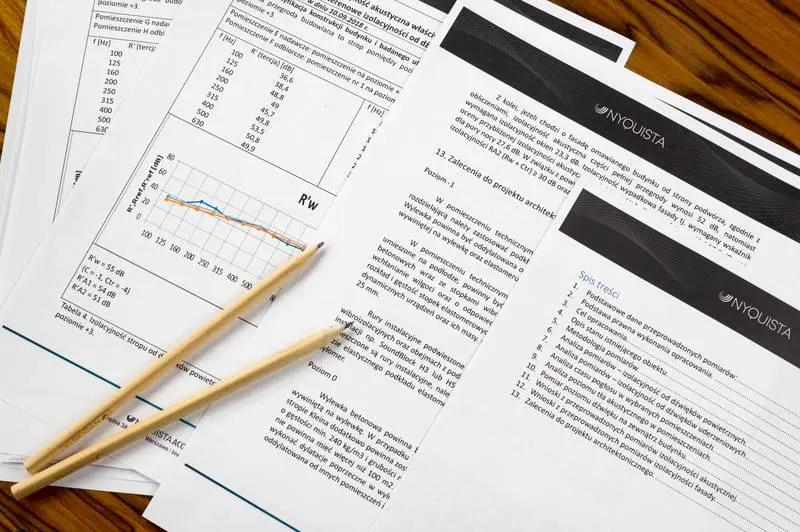
The finale of our work is a comprehensive engineering document. What do you receive? A summary of measurement results, evaluation rating indices, professional acoustic interpretation, and an assessment of compliance with standard requirements for a given room class. Most importantly – we provide design and corrective recommendations.

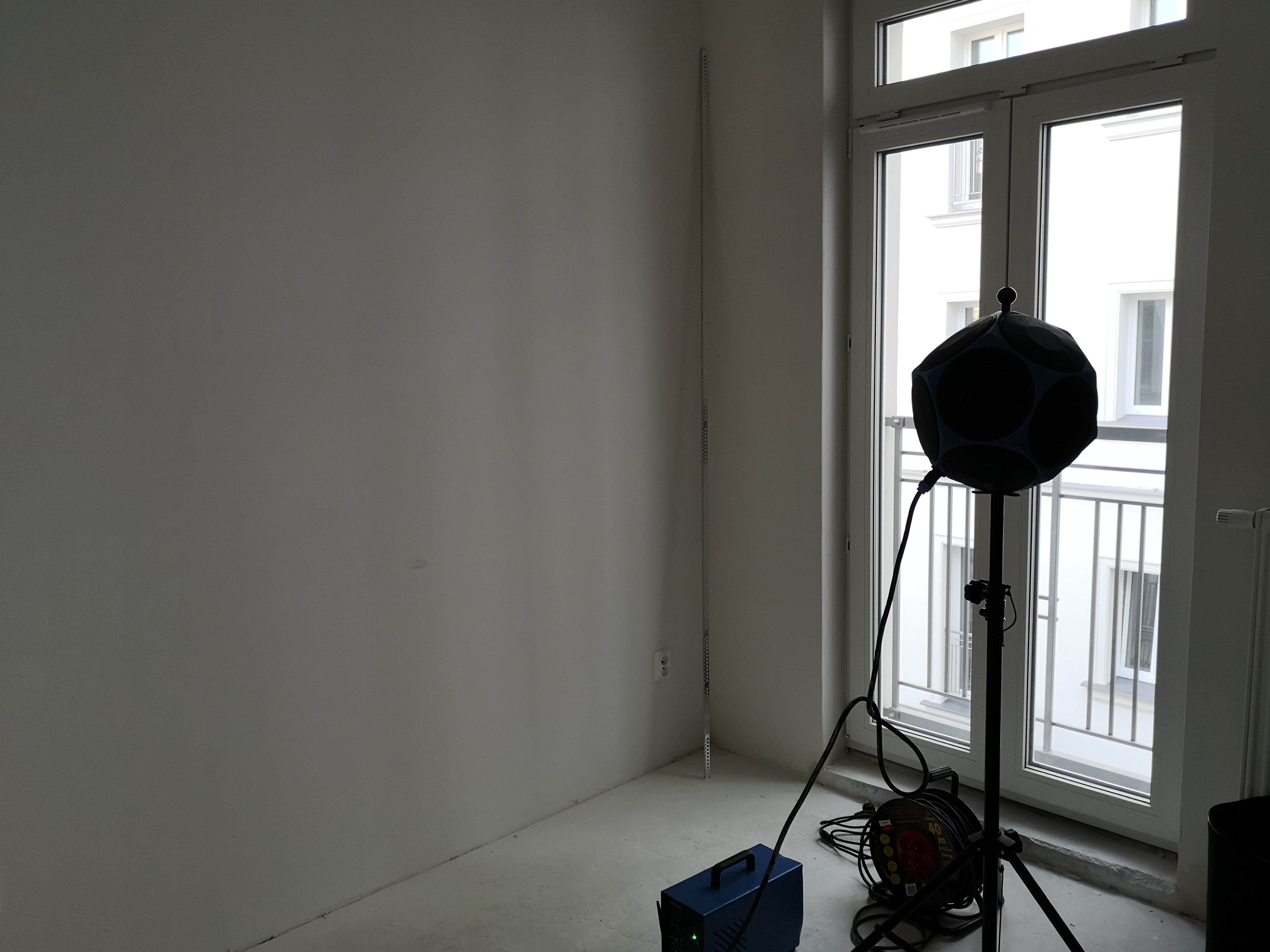
A 10 dB difference is not a minor deviation. It is the difference between intimacy and a conversation being fully audible. No technical data sheet can predict that. Our measurement can.
Office / Showroom
Production / Warehouse
Let's do something together
Use the form - we will respond as soon as possible!