|
Nyquista Team
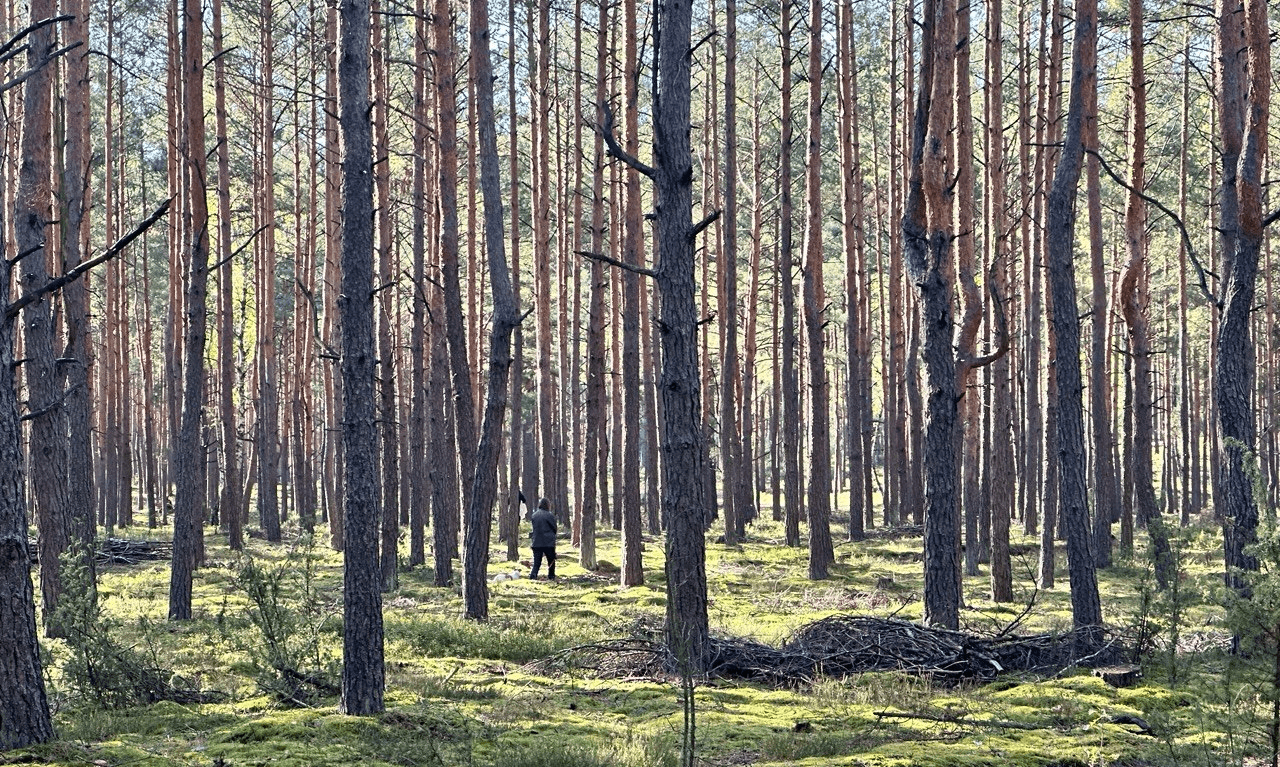
Just over a decade ago, the primary goal of many travels was to visit famous landmarks, engage in active recreation, or experience nightlife. Today, an increasing number of individuals are opting for a completely different way to spend their holidays. We are seeking locations where we can detach from ubiquitous sensory stimuli—a phenomenon referred to as silent tourism, or more frequently in academic literature, silence tourism.
What is Silent Tourism?
The term "silent tourism" does not yet have a single, universally accepted definition. Academic publications more commonly refer to "silence tourism," "quiet tourism," and "soundscape tourism." All of these terms relate to traveling to destinations where a tranquil acoustic environment is a key component of the experience.
Interestingly, researchers emphasize that silent tourism does not imply a complete absence of sound. On the contrary, natural environment sounds, such as birdsong or the rustle of water, are considered the most valuable. The primary issue is anthropogenic noise: road traffic, aircraft, machinery, or loud music.
This is precisely why researchers are increasingly referring to soundscapes. Just as a landscape is formed by visual scenery, a soundscape is composed of all the sounds present in a given location. A well-preserved soundscape can significantly enhance the quality of relaxation.
In Search of Quiet
The growing interest in quiet tourism is no coincidence. Research indicates that chronic noise can negatively affect concentration, well-being, and quality of life. Conversely, contact with a natural acoustic environment promotes relaxation and a positive perception of a destination.
Studies conducted in Finland are particularly noteworthy. Komppula, Konu, and Vikman described how local forests began to be promoted not only for their scenic appeal, but also as spaces conducive to tranquility and rejuvenation. The authors observed that many visitors consciously chose these locations specifically for the opportunity to escape urban noise.
Similar findings were presented by Kou and Xu (2024) in their study of tourists visiting rural areas. Study participants indicated that natural sounds—particularly birdsong and the sound of water—enhanced relaxation and improved the overall quality of their stay.
Traveling with All Senses
For many years, tourism was analyzed primarily through the lens of visual experiences. However, contemporary research demonstrates that what we hear is equally significant.
Frohlick and Macevicius (2023) point out that the travel experience is not limited to photographing attractions. Ambient sounds contribute to memories and influence how visited locations are perceived. The sound of the sea, echoes in the mountains, or the rustle of the forest often remain in the memory as long as the most beautiful vistas.
This approach underscores the growing importance of protecting the acoustic environment. If a unique location becomes dominated by noise, not only does its character change, but so does the visitor experience.
Finland as a Pioneer of Quiet Tourism
For many years, its vast forests and lakes have been recognized as environments conducive to finding peace. Silence is treated as an integral component of the tourism offering, alongside pristine nature and the opportunity to view the Northern Lights.
The country has held the top spot in the World Happiness Report since 2018, an annual ranking prepared under the auspices of the UN that assesses the life satisfaction of residents. While it cannot be concluded that silence alone accounts for Finland's high ranking, close interaction with nature is a vital element of the Finnish lifestyle. This is further facilitated by the established "Everyman’s Right" (Finnish: jokaisenoikeus), which allows everyone to freely access forests, lakes, and many natural areas while respecting the environment. Consequently, both residents and tourists can easily find locations suitable for rest and reflection.
An increasing amount of research also focuses on New Zealand, where the importance of quiet in national parks is being analyzed, as well as rural areas in China, where researchers are examining the impact of natural soundscapes on tourist perceptions.
Furthermore, Carruthers-Jones, Holmes, and Norum (2025) note that the protection of acoustic landscapes can be just as crucial as the protection of visual landscapes. According to the authors, the sounds of nature are part of the natural heritage and are worth preserving for future generations.
The Future of Tourism
Although research on silent tourism is still relatively young, the volume of publications dedicated to this subject is growing rapidly. It is increasingly emphasized that the quality of travel depends not only on the number of attractions, but also on opportunities for relaxation and connection with nature.
In a world where noise has become a daily occurrence, silence is beginning to be perceived as a valuable asset. It is therefore possible that in the future, one of the primary criteria for selecting a vacation destination will be not only a beautiful view, but also the opportunity to... hear nature.
Sources:
· Carruthers-Jones, J., Holmes, G., & Norum, R. (2025). The Sounds of Silence: Perspectives on Documenting Acoustic Landscapes at the Intersection of Remoteness, Conservation and Tourism. Humanities, 14(3), 41.
· Frohlick, S., & Macevicius, C. (2023). Listening Otherwise: From “Silent Tourism” Soundscapes to Privileged Sonic Ways of Knowing. Tourist Studies. https://doi.org/10.1177/14687976231171713
· Komppula, R., Konu, H., & Vikman, N. (2017). Listening to the Sounds of Silence: Forest-based Wellbeing Tourism in Finland. In: Nature Tourism (Routledge).
· Kou, L., & Xu, H. (2024). Experiencing Therapeutic Soundscapes in Rural Tourism Destinations. Tourism Geographies.
· Pelkonen, T. (2020). Motivations for Silence Tourism. University of Eastern Finland.
· Stokowski, P. A. (2024). Sound and Sound Interactions in Outdoor Recreation and Tourism Places. In: Soundscapes and Sensescapes Encompassing Tourism Experiences (CABI).

See also



Office / Showroom
Production / Warehouse
Let's do something together
Use the form - we will respond as soon as possible!