|
Jerzy Herse
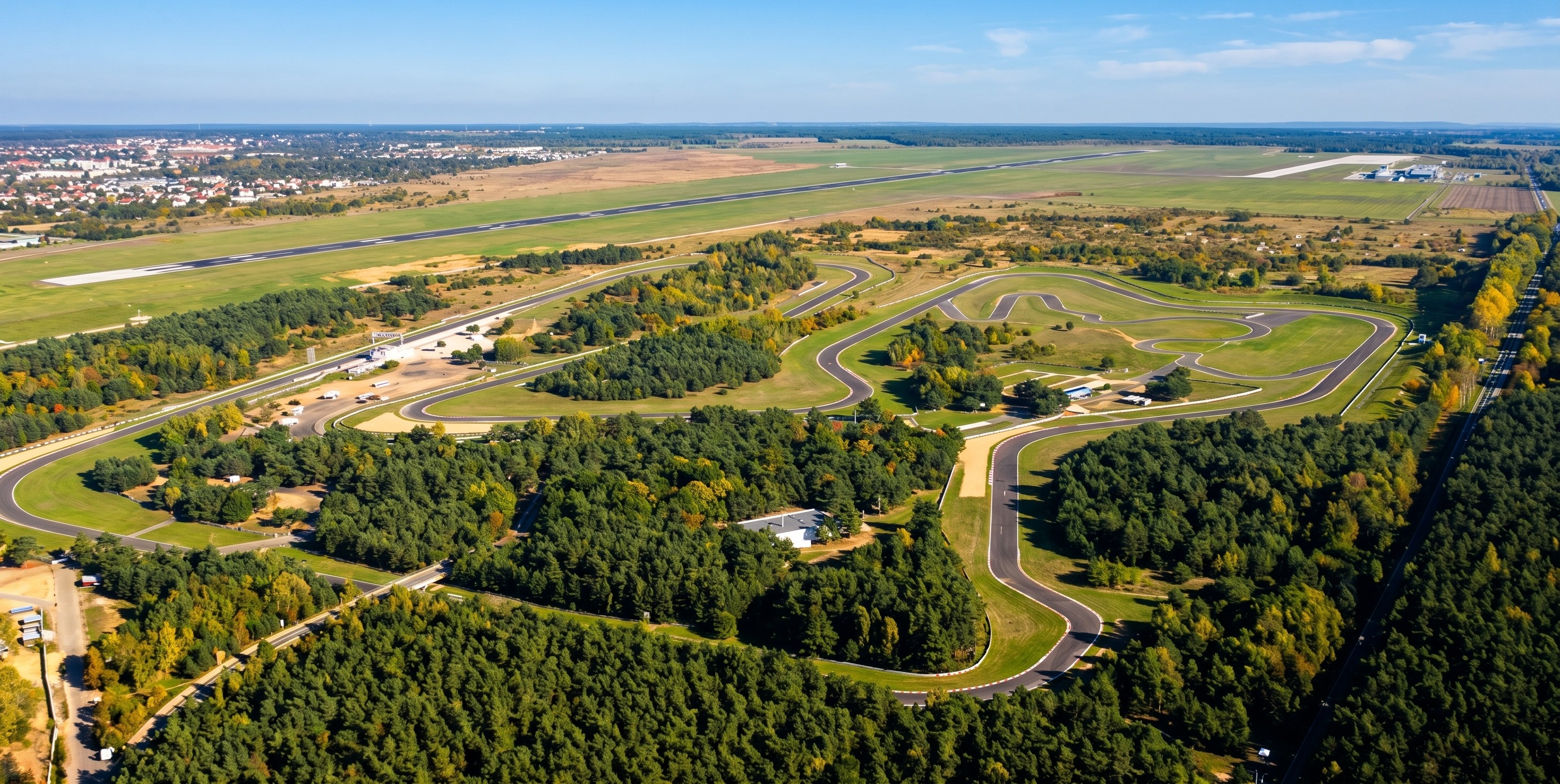
Tor Poznań is a legend. It was on this asphalt that Robert Kubica and Michael Schumacher, raced, and on a daily basis the police, fire brigade and the military train there. The facility was built in 1977 next to Ławica Airport, in an area where there was practically no residential development. The city, however, kept expanding, houses moved right up to the track boundaries, and today their residents are demanding quiet.
The GIOŚ decision is based on hard data. On several nearby streets in Przeźmierowo, the permissible noise limit is 51 dB. Meanwhile, on training and race days, noise from the track reached 60, and even 70 dB there. The regulations are unforgiving – the track has been closed.
The motorsport community points to the absurdity of the situation: the track borders an active airport, which generates enormous noise, but it is protected by other laws. But is a legal battle the only way to defend against closure? At Nyquista Acoustic Design, we believe that where the decibel problem begins, advanced environmental engineering should enter the game.
Close it or isolate it? An acoustic perspective on the problem
Most discussions around Tor Poznań focus on the law. We propose focusing on physics. The noise emitted by racing cars (especially the roar of exhausts and the screeching of tires) is powerful acoustic energy, dominated by low frequencies that are difficult to attenuate. Traditional, thin acoustic screens (known from highways) often prove insufficient in such cases.
So how do you solve a problem that seems unsolvable? The remediation process should consist of three engineering steps:
1. Environmental measurements – the foundation of action
You cannot silence a facility "by eye". Before any barrier is erected, precise environmental measurements are essential. We need to determine the exact frequency spectrum of the noise (which bands dominate) and map the sound propagation paths from the track surface to residents' windows. Measurements make it possible to separate track noise from the background (for example, planes taking off from nearby Ławica).
2. Simulations in SoundPlan software – forecasting the future
When we have measurement data, we move Tor Poznań into the digital world. Using advanced acoustic modeling software (e.g., SoundPlan), we create a 3D terrain model.
We input the planned acoustic safeguards into the system and check how the sound wave behaves. The simulation answers key questions for us:
How high must the screen be for the noise level on a street in Przeźmierowo to fall below the required 51 dB?
Will the sound not "spill over" the top and strike the houses located further away?
Simulations make it possible to optimize costs – we build the barrier exactly where, and exactly as high as necessary.
3. A non-standard solution: mass that reflects sound
When talking about fighting noise, the first association is gigantic, transparent or sheet-metal acoustic screens, as we know them from highways. However, in motorsport this solution often fails. Why? To stop the powerful roar of engines and racing exhausts, we need mass. Physics cannot be fooled – low frequencies (bass rumble) simply ignore lightweight obstacles, passing through them like paper.
Noise protection does not always have to mean building expensive industrial structures made of steel and polycarbonate. In the case of Tor Poznań, our design department is considering a solution that is as effective as it is unconventional: the use of massive concrete planter blocks filled with soil.
Planter blocks, usually used as decorative slope reinforcements in landscape architecture, can in this case become a powerful, multi-meter-high sound retaining wall.

Why is this solution brilliant in its simplicity?
Law of mass: Concrete and compacted soil are excellent, heavy insulators. Such a wall can block even the lowest bass frequencies generated by sports cars.
Directing the noise: With the right design of the planter-block wall angle, we can reflect the acoustic energy from the track and redirect it back to the facility or... toward the airport, shifting the problem away from residential development.
No height limit: Planter-block structures can be safely extended to great heights (as indicated by the SoundPlan simulation), creating a massive earth embankment.
Aesthetics and Ecology: A wall of planter blocks does not have to look like a gray prison wall. It can be planted with vegetation, creating a so-called green wall. For residents, it is an aesthetic view, and for the environment, an additional ecological buffer.
Costs: Compared with technologically advanced industrial screens, building an embankment from concrete planter blocks and soil is a highly cost-effective solution.
Summary: Physics instead of padlocks
The case of Tor Poznań is a harsh lesson for all facilities generating noise – from shooting ranges, through industrial plants, to open-air music clubs. The conflict between expanding cities and operating infrastructure will continue to intensify.
However, closing a facility is rarely the only way out. The application of hard engineering – environmental measurements, computer models and thoughtful, physics-based insulating structures – makes it possible to reconcile fire and water. Even if that requires piling up a mountain of concrete and soil.
Is your facility struggling with noise limit exceedances? Are you facing administrative penalties or neighbor protests? Do not wait for the GIOŚ decision. Contact Nyquista's environmental measurement and simulation department. We will measure, simulate, and design

See also



Office / Showroom
Production / Warehouse
Let's do something together
Use the form - we will respond as soon as possible!