SilenceMat
SilenceMat
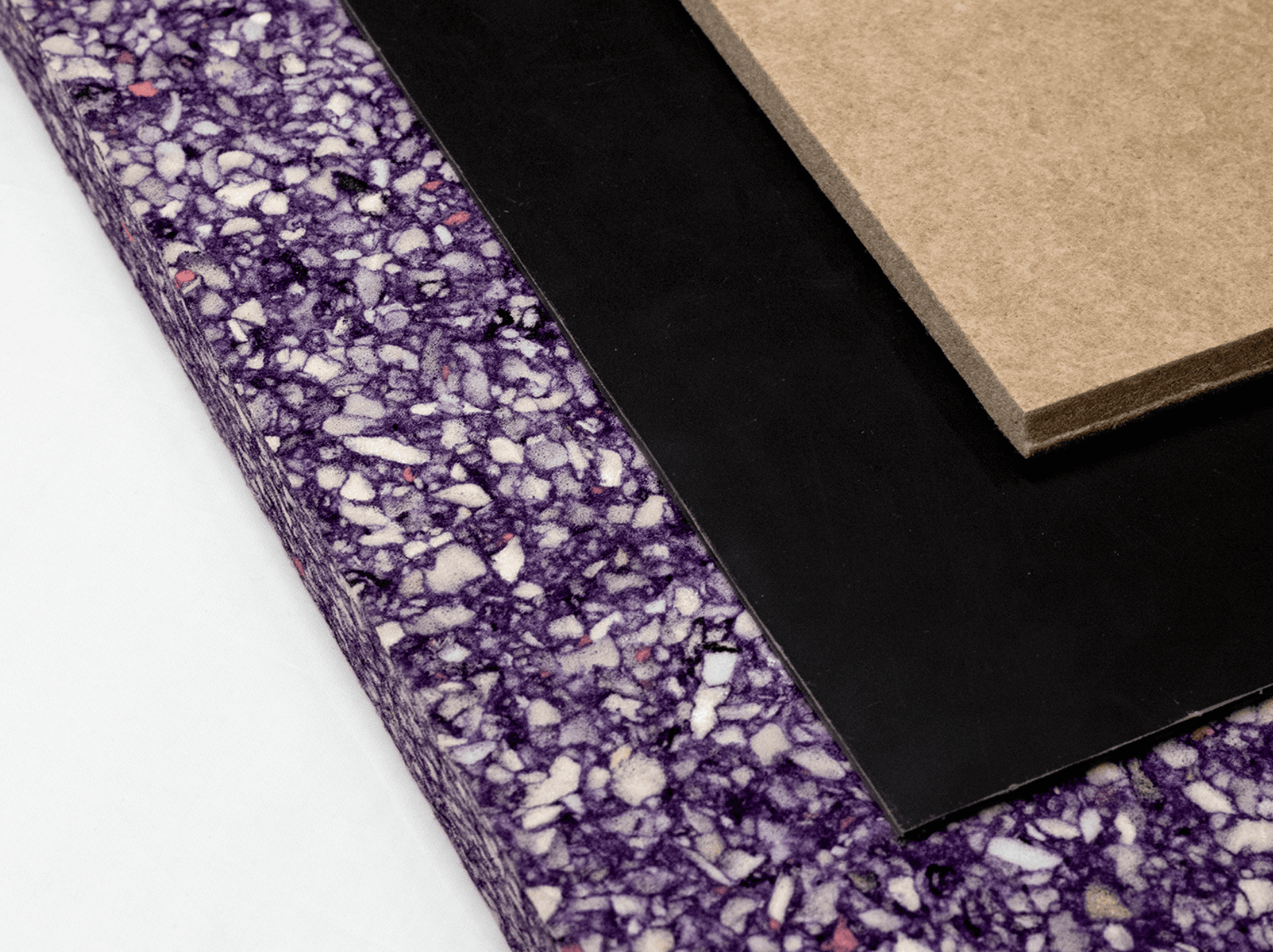
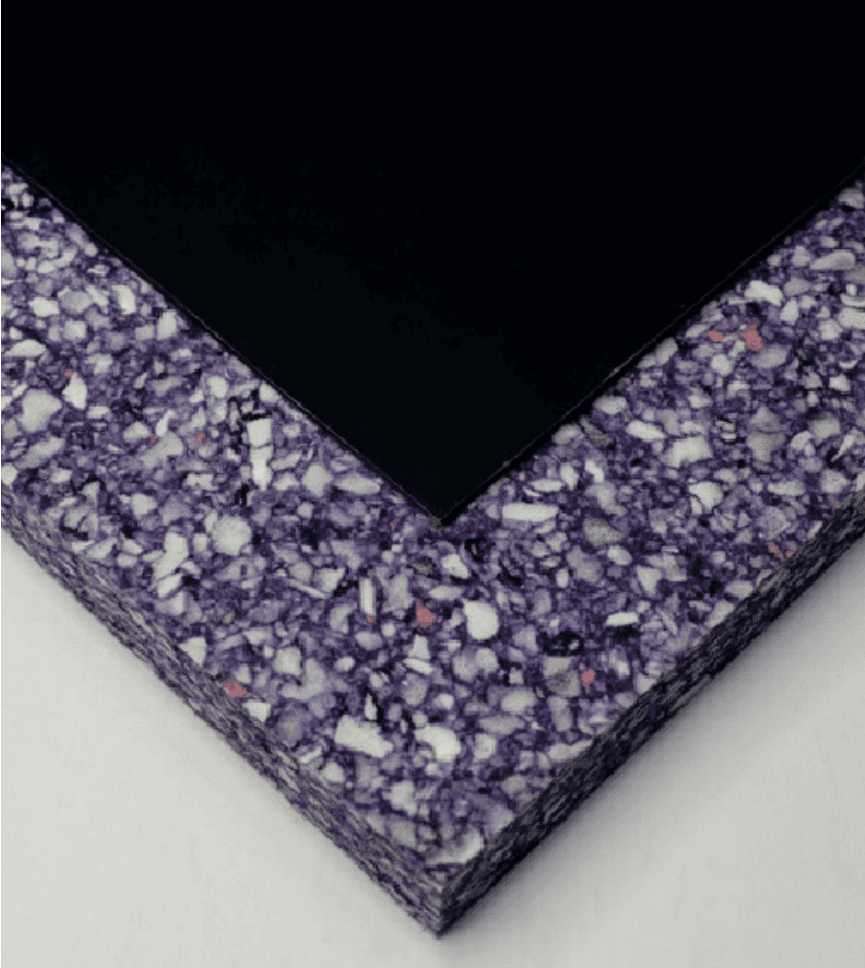
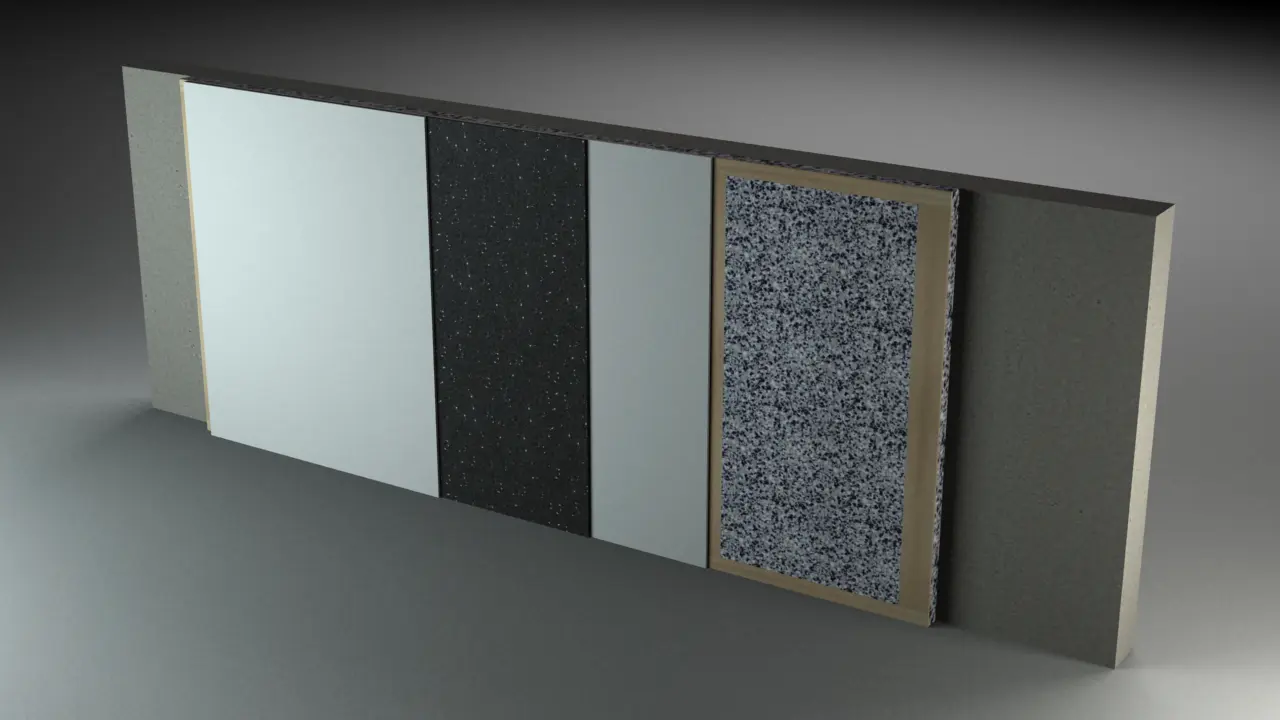
Silence Mat is a multi-layer acoustic insulation system designed for installation on finished building partitions.
Silence Mat is a multi-layer acoustic insulation system designed for installation on finished building partitions.
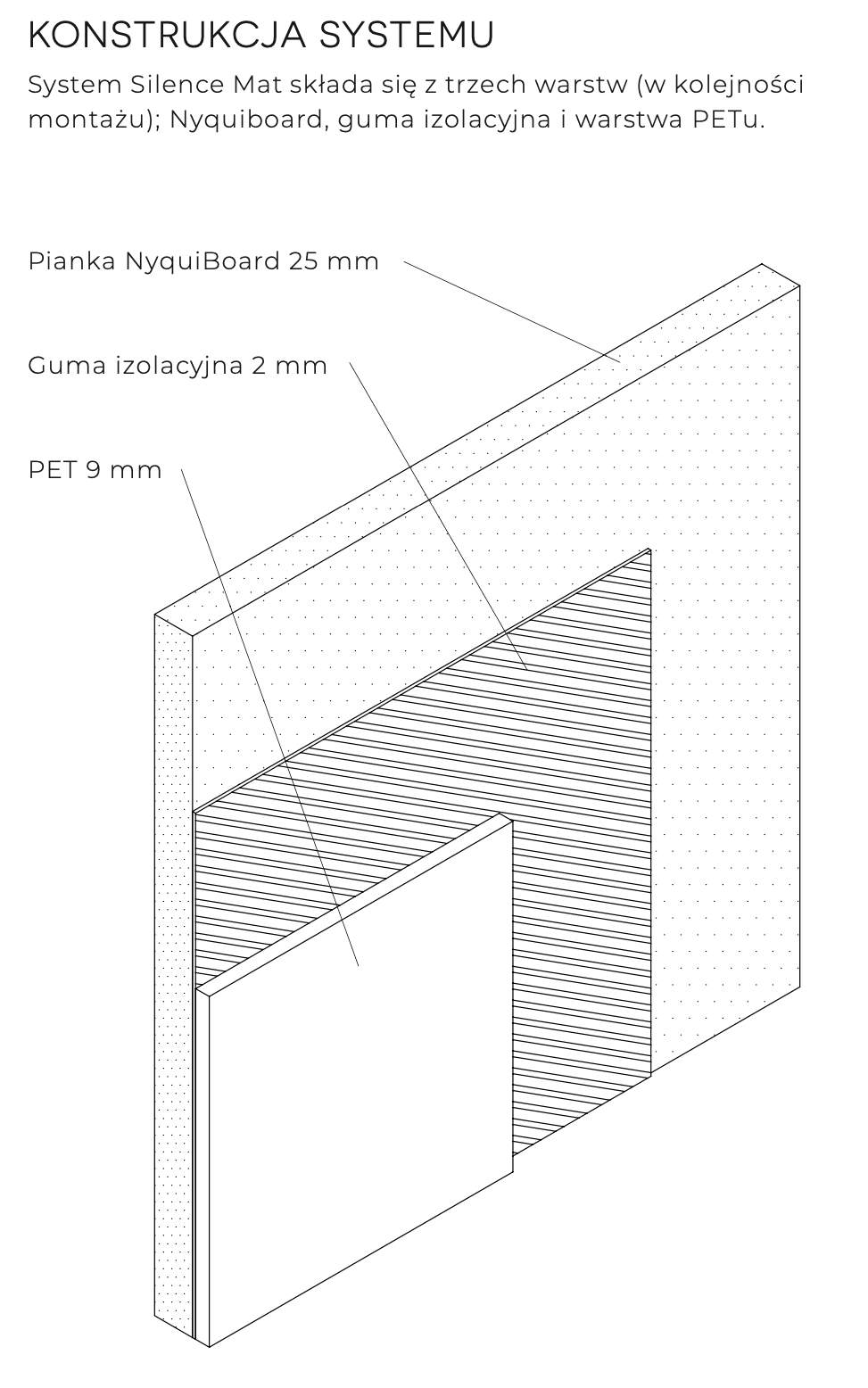
Silence Mat is a multilayer sound insulation system designed for installation on ready-made building partitions. By completely eliminating the substructure, Silence Mat creates a so-called floating surface, preventing the formation of acoustic bridges between the partition. The insulation layers, in the form of resilient foam with high density and a heavy anti-vibration substrate, provide a high level of vibration damping. Silence Mat is characterized by very high effectiveness with a small amount of occupied surface area.
Application
The system should be glued (not screwed) directly to the wall using flexible adhesive based on polymers, polyurethanes or flexible cement mortar. The adhesive must not contain any solvent-based substances.
The surface to which the system is mounted should be even and free from contaminants.
Before installing the system, a joint in the form of a vibro-isolation substrate V-MAT 350 should be installed around the entire perimeter of the wall at the mounting surface and under the profiles, and then the flexible gap should be filled with sealing compound.
To effectively install the system, it is essential to strictly follow the attached installation instructions.
The effectiveness of the system's sound insulation depends on the accuracy of installation and the precise filling of joints with putty.
As the external layer, it is recommended to use gypsum fiberboards or cement-bonded fiberboards with
enhanced sound insulation properties.
Material
Application
The system should be glued (not screwed) directly to the wall using flexible adhesive based on polymers, polyurethanes or flexible cement mortar. The adhesive must not contain any solvent-based substances.
The surface to which the system is mounted should be even and free from contaminants.
Before installing the system, a joint in the form of a vibro-isolation substrate V-MAT 350 should be installed around the entire perimeter of the wall at the mounting surface and under the profiles, and then the flexible gap should be filled with sealing compound.
To effectively install the system, it is essential to strictly follow the attached installation instructions.
The effectiveness of the system's sound insulation depends on the accuracy of installation and the precise filling of joints with putty.
As the external layer, it is recommended to use gypsum fiberboards or cement-bonded fiberboards with
enhanced sound insulation properties.
Material
Application
The system should be glued (not screwed) directly to the wall using flexible adhesive based on polymers, polyurethanes or flexible cement mortar. The adhesive must not contain any solvent-based substances.
The surface to which the system is mounted should be even and free from contaminants.
Before installing the system, a joint in the form of a vibro-isolation substrate V-MAT 350 should be installed around the entire perimeter of the wall at the mounting surface and under the profiles, and then the flexible gap should be filled with sealing compound.
To effectively install the system, it is essential to strictly follow the attached installation instructions.
The effectiveness of the system's sound insulation depends on the accuracy of installation and the precise filling of joints with putty.
As the external layer, it is recommended to use gypsum fiberboards or cement-bonded fiberboards with
enhanced sound insulation properties.
Material
Application
The system should be glued (not screwed) directly to the wall using flexible adhesive based on polymers, polyurethanes or flexible cement mortar. The adhesive must not contain any solvent-based substances.
The surface to which the system is mounted should be even and free from contaminants.
Before installing the system, a joint in the form of a vibro-isolation substrate V-MAT 350 should be installed around the entire perimeter of the wall at the mounting surface and under the profiles, and then the flexible gap should be filled with sealing compound.
To effectively install the system, it is essential to strictly follow the attached installation instructions.
The effectiveness of the system's sound insulation depends on the accuracy of installation and the precise filling of joints with putty.
As the external layer, it is recommended to use gypsum fiberboards or cement-bonded fiberboards with
enhanced sound insulation properties.
Material
Technical drawings
Technical drawings
Technical drawings
Technical drawings
Available colors
Available colors
Available colors
Downloads
Downloads
Downloads
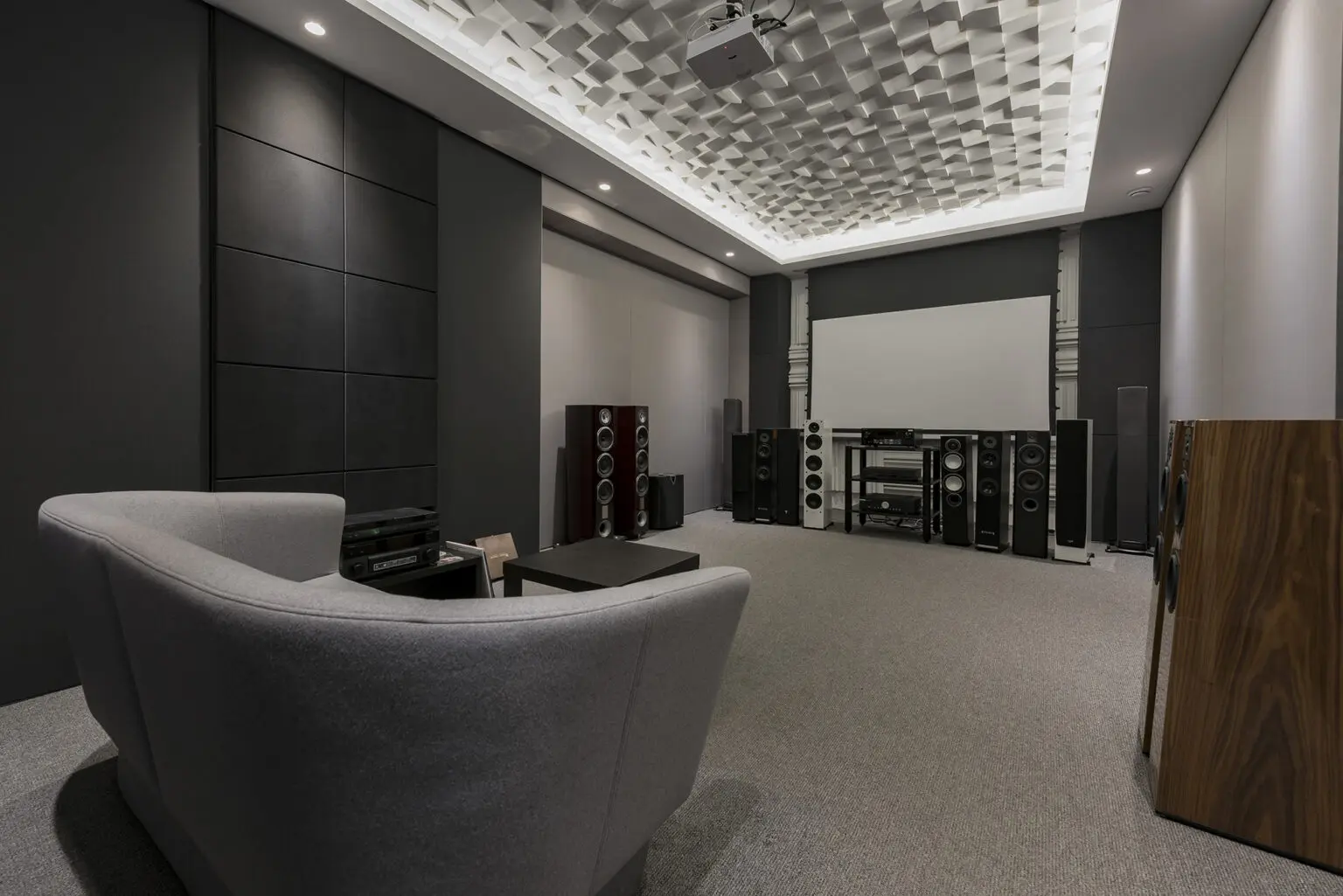
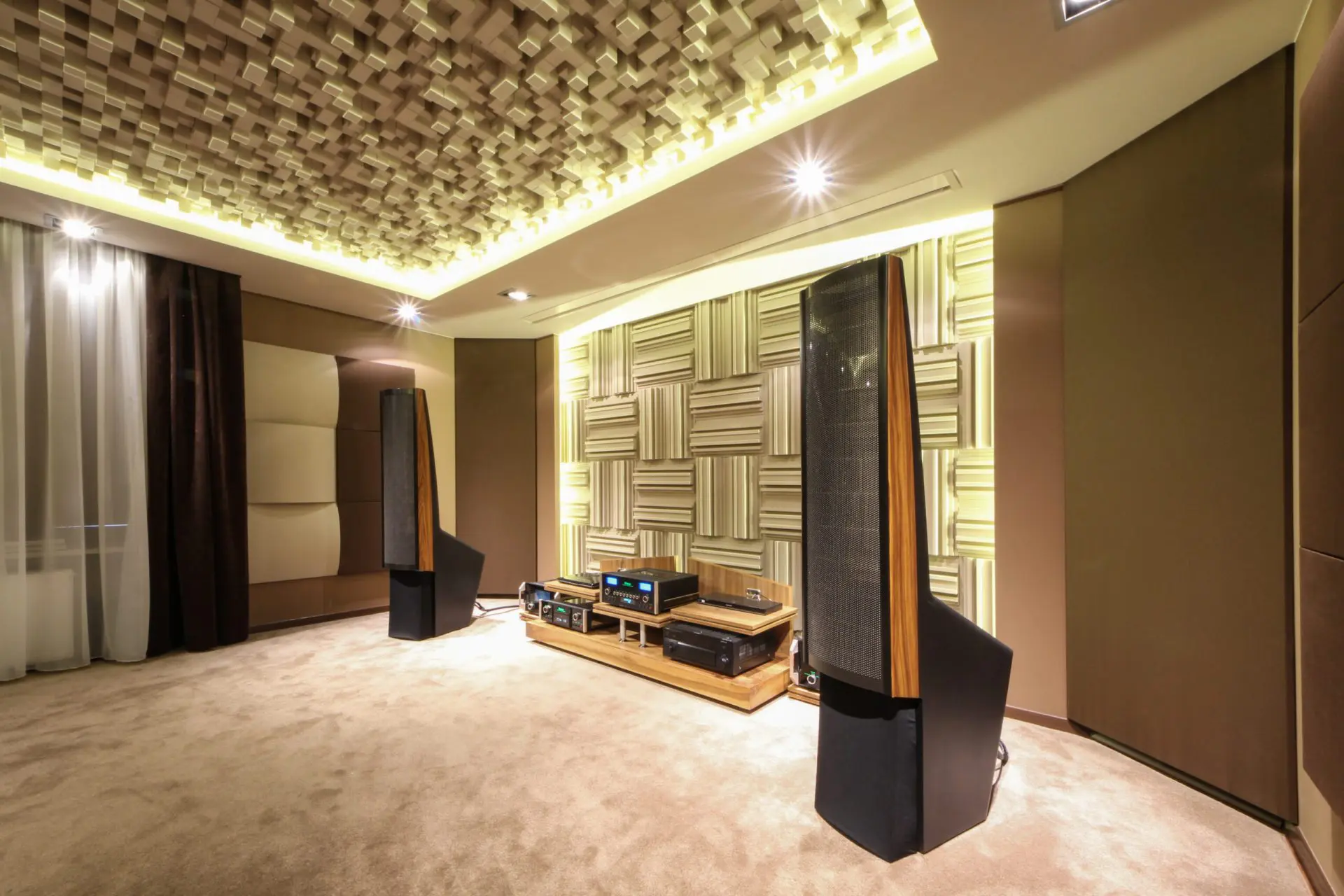
Acoustic diffusers from the Proline and Hi-fi series are professional solutions dedicated to recording studios, home theaters, and demanding listening spaces. Thanks to advanced geometry, they effectively disperse sound waves, eliminating echo while maintaining natural spaciousness and vividness of sound. The variety of forms – from classic Schroeder arrangements to organic 3D patterns – allows for the combination of the highest acoustic engineering with unique design, creating ideal listening conditions without the effect of excessive over-damping.


Insulation
Insulation
other products
Talk to our expert
Michał Dajniak
Vibroacoustic specialist
It deals with computational methods in acoustics and civil engineering, as well as 3D graphics, acoustic measurements, and the design of tools based on microcontrollers.

Talk to our expert
Michał Dajniak
Vibroacoustic specialist
It deals with computational methods in acoustics and civil engineering, as well as 3D graphics, acoustic measurements, and the design of tools based on microcontrollers.
Talk to our expert
Michał Dajniak
Vibroacoustic specialist
It deals with computational methods in acoustics and civil engineering, as well as 3D graphics, acoustic measurements, and the design of tools based on microcontrollers.
Contact us
Contact us
Contact us
Office / Showroom
Production / Warehouse
Let's do something together
Use the form - we will respond as soon as possible!