Eco Wall Baffle

Eco Wall Baffle

High sound absorption coefficient and unique design

High sound absorption coefficient and unique design

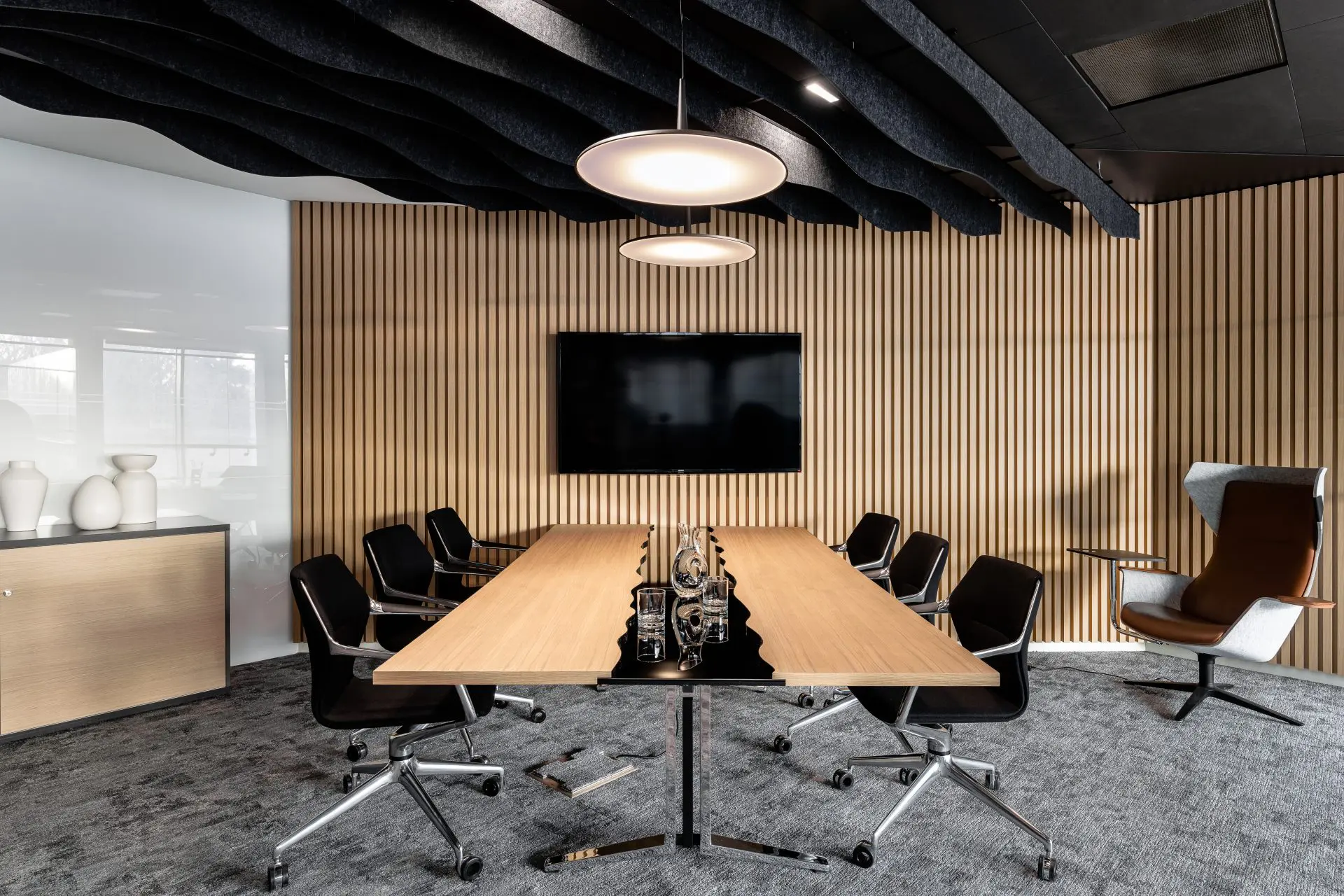
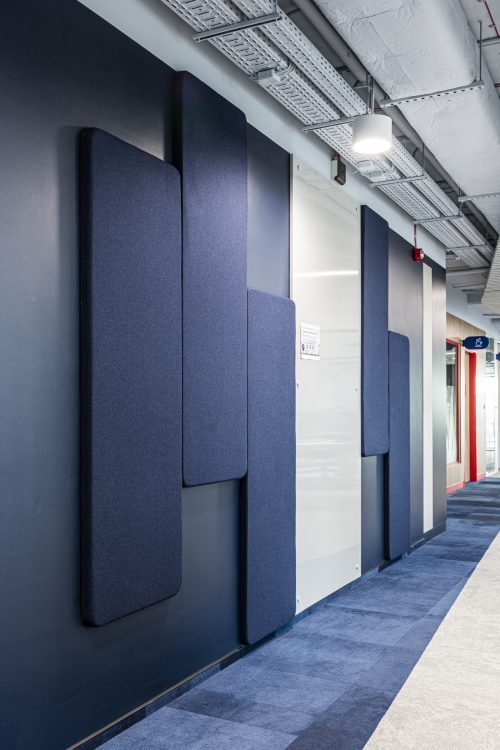
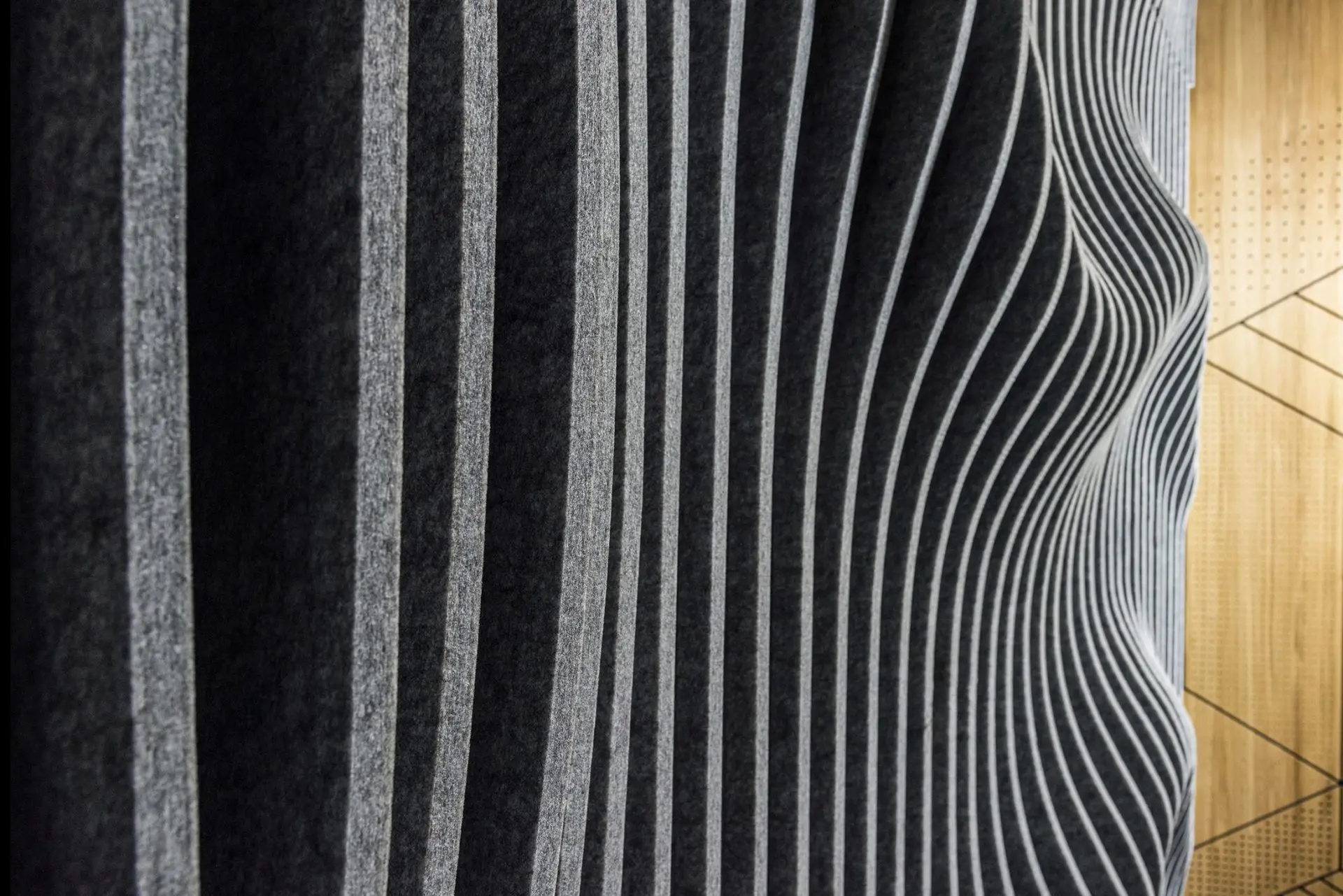
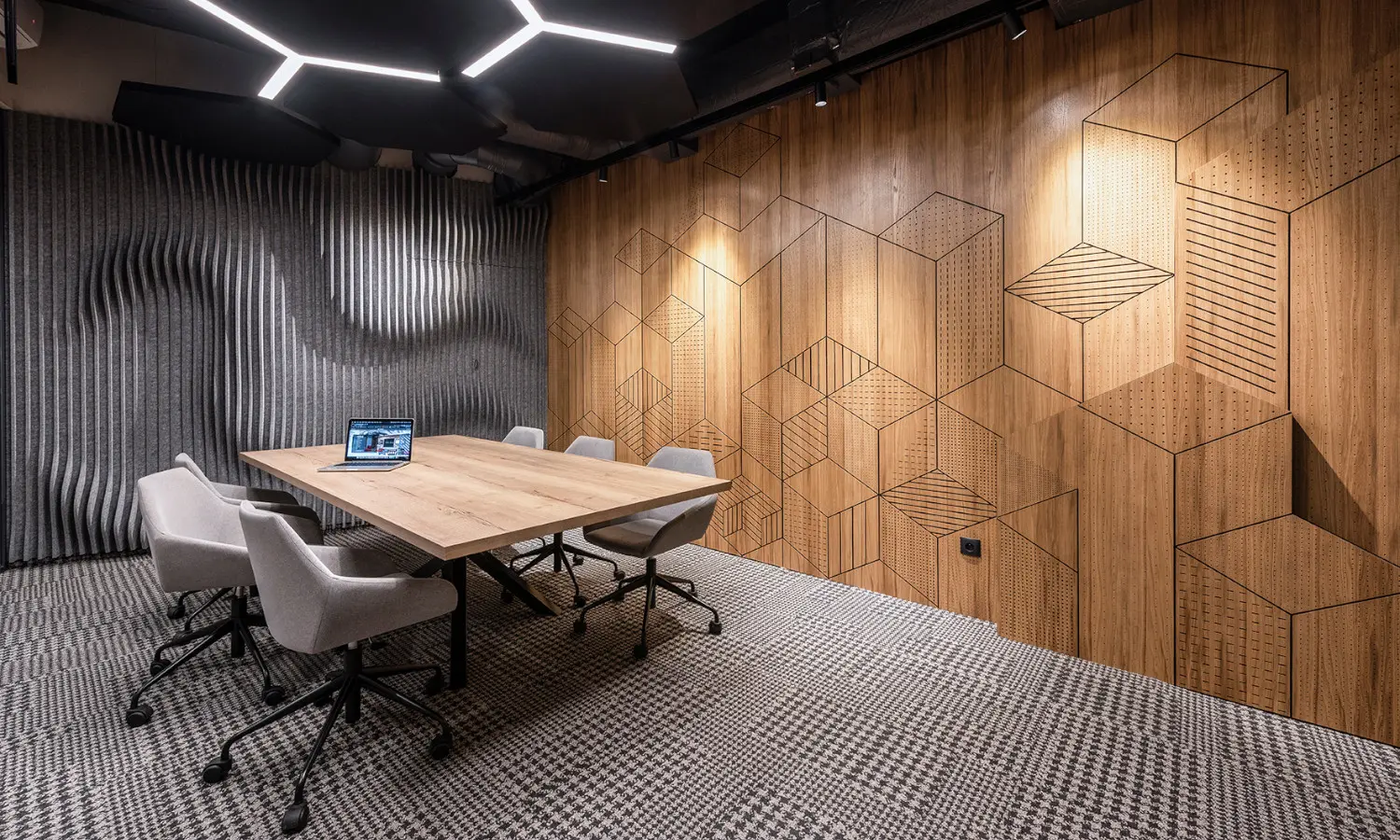
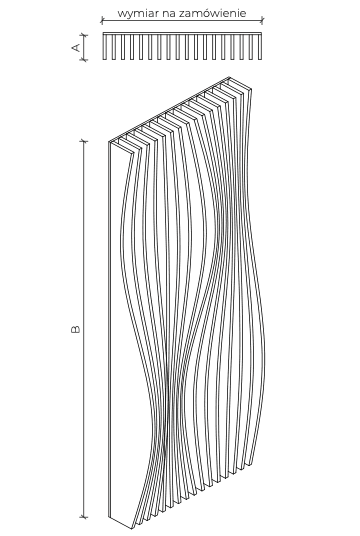
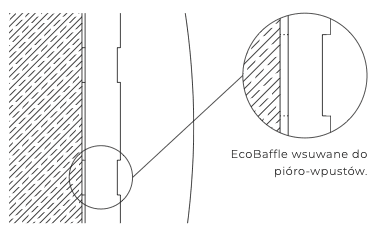
The special acoustic wall panel EcoWall Baffle has been prepared by experienced architects in collaboration with acousticians. In creating it, we wanted to utilize the possibilities of the ecological material EcoBoard, combining the research-proven sound absorption class with a unique design. The base of the panel is made of compressed recycled PET polyester wool with a thickness of 15mm. Vertical baffles of the same width, spacing, but different heights (from 3cm to 15cm) are attached to it. The pattern is designed to create the impression of a moving wave. As a result, an incredibly spacious 3D shape has been achieved. The slim baffles optically enlarge the room and give it a dynamic character while effectively reducing echo.
Application

The varied height of the ridges causes sound absorption over a very wide range of frequencies (from 125 Hz to 10 kHz). The lattice structure creates a kind of partitions into which sound enters and is trapped. Therefore, the absorbing surface here is significantly larger than in the case of traditional acoustic panels (αw ≥ 0.95). This, in turn, translates to much better effectiveness when using fewer panels on the walls.

Material

Application

The varied height of the ridges causes sound absorption over a very wide range of frequencies (from 125 Hz to 10 kHz). The lattice structure creates a kind of partitions into which sound enters and is trapped. Therefore, the absorbing surface here is significantly larger than in the case of traditional acoustic panels (αw ≥ 0.95). This, in turn, translates to much better effectiveness when using fewer panels on the walls.

Material

Application

The varied height of the ridges causes sound absorption over a very wide range of frequencies (from 125 Hz to 10 kHz). The lattice structure creates a kind of partitions into which sound enters and is trapped. Therefore, the absorbing surface here is significantly larger than in the case of traditional acoustic panels (αw ≥ 0.95). This, in turn, translates to much better effectiveness when using fewer panels on the walls.

Material

Application

The varied height of the ridges causes sound absorption over a very wide range of frequencies (from 125 Hz to 10 kHz). The lattice structure creates a kind of partitions into which sound enters and is trapped. Therefore, the absorbing surface here is significantly larger than in the case of traditional acoustic panels (αw ≥ 0.95). This, in turn, translates to much better effectiveness when using fewer panels on the walls.

Material

Technical drawings
Technical drawings
Technical drawings
Technical drawings
Available colors
Available colors
Available colors
Product Gallery
Product Gallery
Product Gallery

Follow us on Instagram