
Air gap: how the distance from the wall increases the effectiveness of acoustic devices
|
Nyquist Team
You have invested in acoustic panels, but you still feel that the acoustics of your room could be better? Before you reach for thicker and more expensive materials, learn the secret that lies just behind your treatment. We are talking about the air gap – a deliberately left space between the panel and the wall. This is one of the simplest and most effective ways to radically improve sound absorption effectiveness, especially at problematic lower frequencies.
Why is the distance of the panel from the wall so important? How it works
We often focus on the absorbing material – its density and thickness. However, the arrangement of panel + air gap + wall creates an entirely new acoustic system. The gap acts like a air spring, which changes the acoustic impedance of the whole setup.
What does it mean in practice?
Better adaptation to the environment: The system with an air gap is better "tuned" to the air in the room. As a result, sound waves are more eager to penetrate the material rather than reflect off its surface.
More effective energy absorption: When a sound wave passes through the panel and then hits the air gap, its particles slow down and are forced to vibrate. This causes the conversion of acoustic energy into heat, which is the essence of absorption.
This phenomenon is crucial where standard panels glued directly to the wall fail – in the range of mid and low frequencies.
How does the depth of the gap affect absorption? [Data and Practice]
The right distance from the wall allows for precise "aiming" at specific frequency bands. Scientific research, including the work of the Moesli Muhammad team, and our practice in acoustic adaptation of rooms confirm this relationship.
Gap 10–20 mm: Even a small distance significantly increases the sound absorption coefficient in the range of 500–1500 Hz. This is the ideal solution for improving speech intelligibility and reducing office noise or reverberation in a living room.
Gap 30–50 mm: Increasing the distance shifts the maximum effectiveness towards lower frequencies, covering the band of 250–500 Hz. This is an optimal choice for universal broadband panels in home recording studios, listening rooms, or rehearsal spaces.
Gap 100–200 mm: Such distances are reserved for dedicated low-frequency devices. When combined with thick material (e.g., high-density mineral wool), they create effective bass traps, which are essential for controlling rumbling bass.
Note: A gap that is too small (below 10 mm) is unfavorable. It can lead to unwanted resonances that, instead of helping, worsen the device's performance in some bands.
When can an air gap be harmful? Two mistakes to avoid
Although moving the panel away from the wall is a powerful tool, improper use can cause more harm than good.
Mistake No. 1: Too small distance (<10 mm)
As mentioned, the minimum gap is crucial. Gluing the panel "almost" to the wall, but not quite, can create a narrow gap that behaves unpredictably, reducing effectiveness. Either we mount the panel directly on the wall or maintain a conscious, calculated distance.Mistake No. 2: Too large, uncontrolled distance (>200 mm)
For standard broadband panels, excessive gap (e.g., 300 mm) weakens their performance in the mid and high band while not providing precise bass control. Such large distances only make sense in specialized, custom-designed resonant devices (e.g., Helmholtz resonators), where the gap is a key element tuning the entire system to a specific frequency.
Practical guide: What distance should you choose for your room?
To choose the optimal gap, first identify your goal.
Goal: Reduce reverberation, improve speech intelligibility (office, living room, conference room)
Recommended gap: 20–50 mm.
Why? This distance most effectively enhances the performance of panels in the range of human voice and typical background noises.
Goal: Control mids and lows (home studio, listening room, home theater)
Recommended gap: 50–100 mm for broadband panels.
Why? It shifts the panel's effectiveness downward, helping to tame the "muddy" lower registers of instruments and vocals.
Goal: Precise combat against rumbling bass (corners of rooms)
Recommended gap: 100–200 mm (or even more in dedicated constructions).
Why? Only a large depth combined with the appropriate material can create an effective bass trap. It is worth considering mounting panels diagonally in corners, which naturally creates a large air gap behind them.
Summary: Your simplest and free acoustic upgrade
The air gap behind the acoustic panel is not a detail, but a fundamental element affecting its performance. Instead of investing in doubling the thickness of material, it often suffices to wisely utilize the available space.
Remember these 3 principles:
Always leave a gap (min. 20 mm), unless the specifics of installation require otherwise.
Adjust the depth of the gap to the problem you want to solve (larger gap = action on lower frequencies).
Avoid extremes – both too small and too large, unthoughtful gaps can worsen the effect.
Proper use of the air gap is proof that in acoustics, the best solutions are often the simplest.
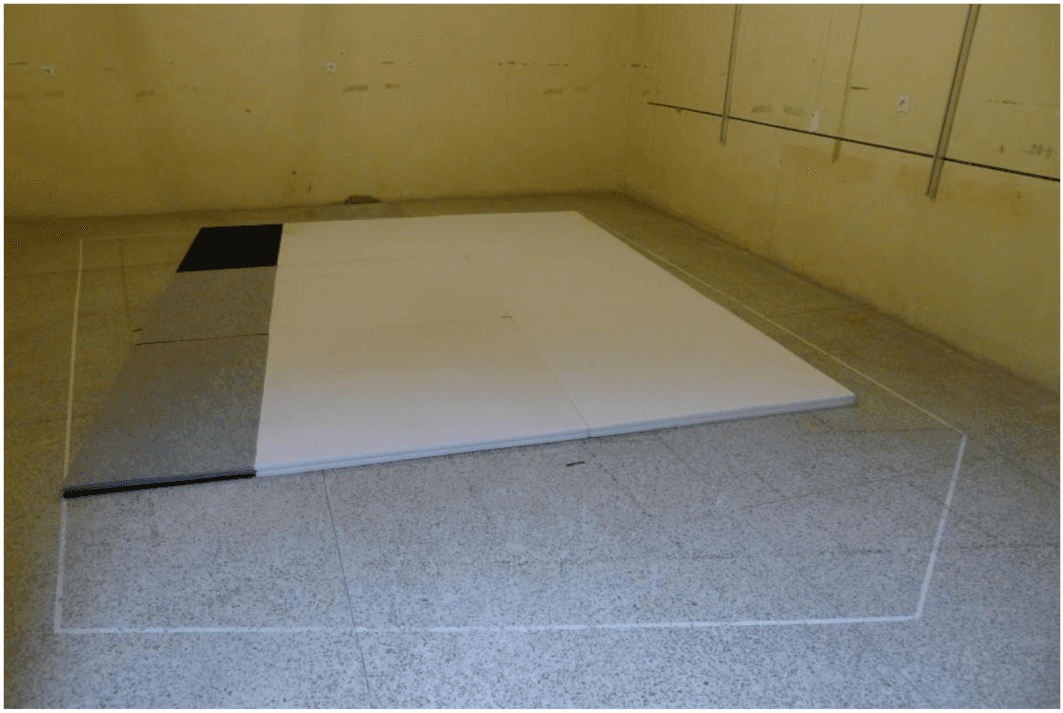
Figure 1 – Studied Polyester Felt Panels PET thickness 45 mm.
Installed on the floor of the reverberation chamber
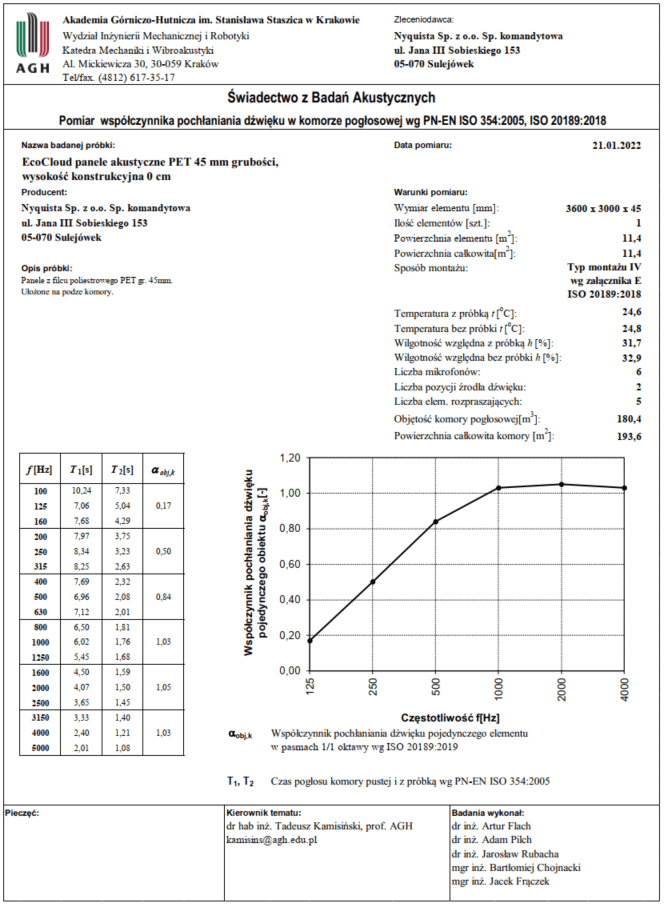
Figure 2 – Acoustic absorption test results for panels made of polyester felt PET thickness 45 mm.
Installed on the floor of the reverberation chamber.
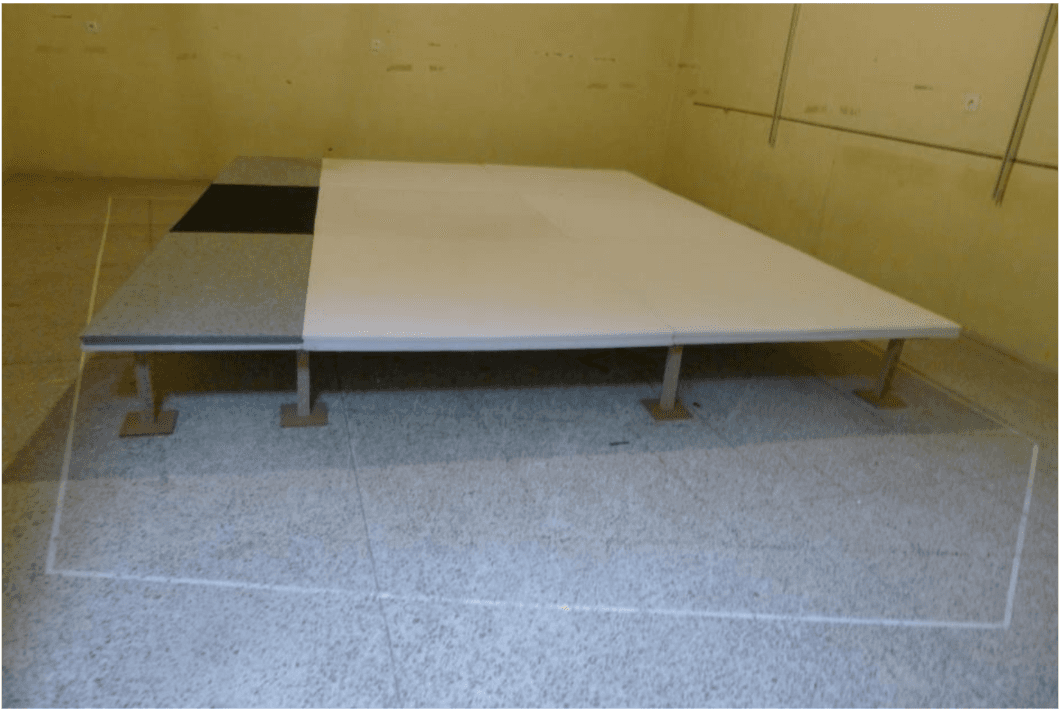
Figure 3 – Studied Polyester Felt Panels PET thickness 45 mm.
Installed 30 cm from the floor of the reverberation chamber.
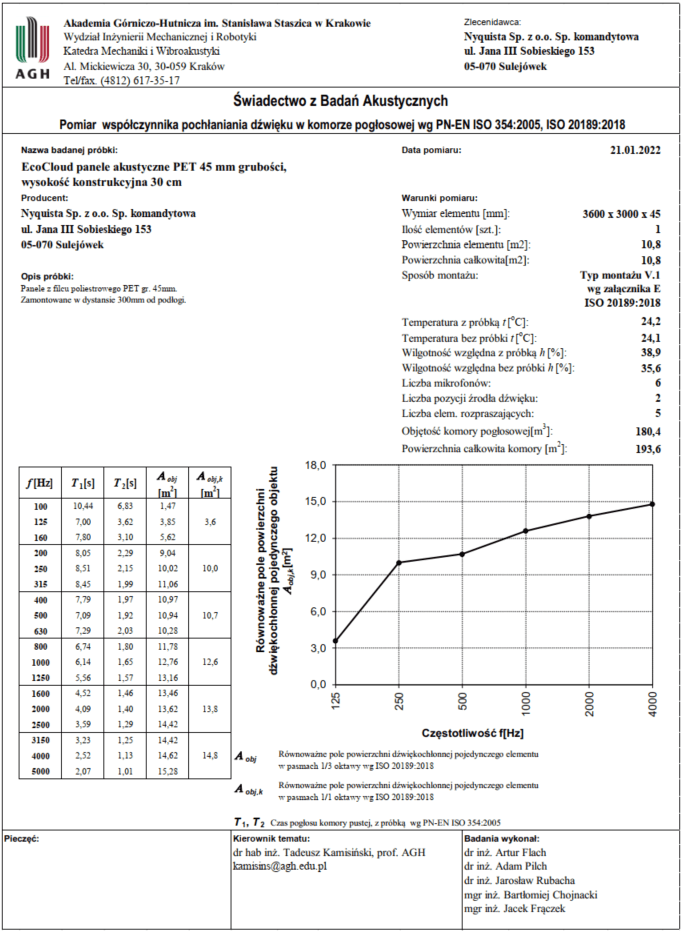
Figure 4 – Acoustic absorption test results for panels made of polyester felt PET thickness 45 mm,
installed 30 cm from the floor of the reverberation chamber.
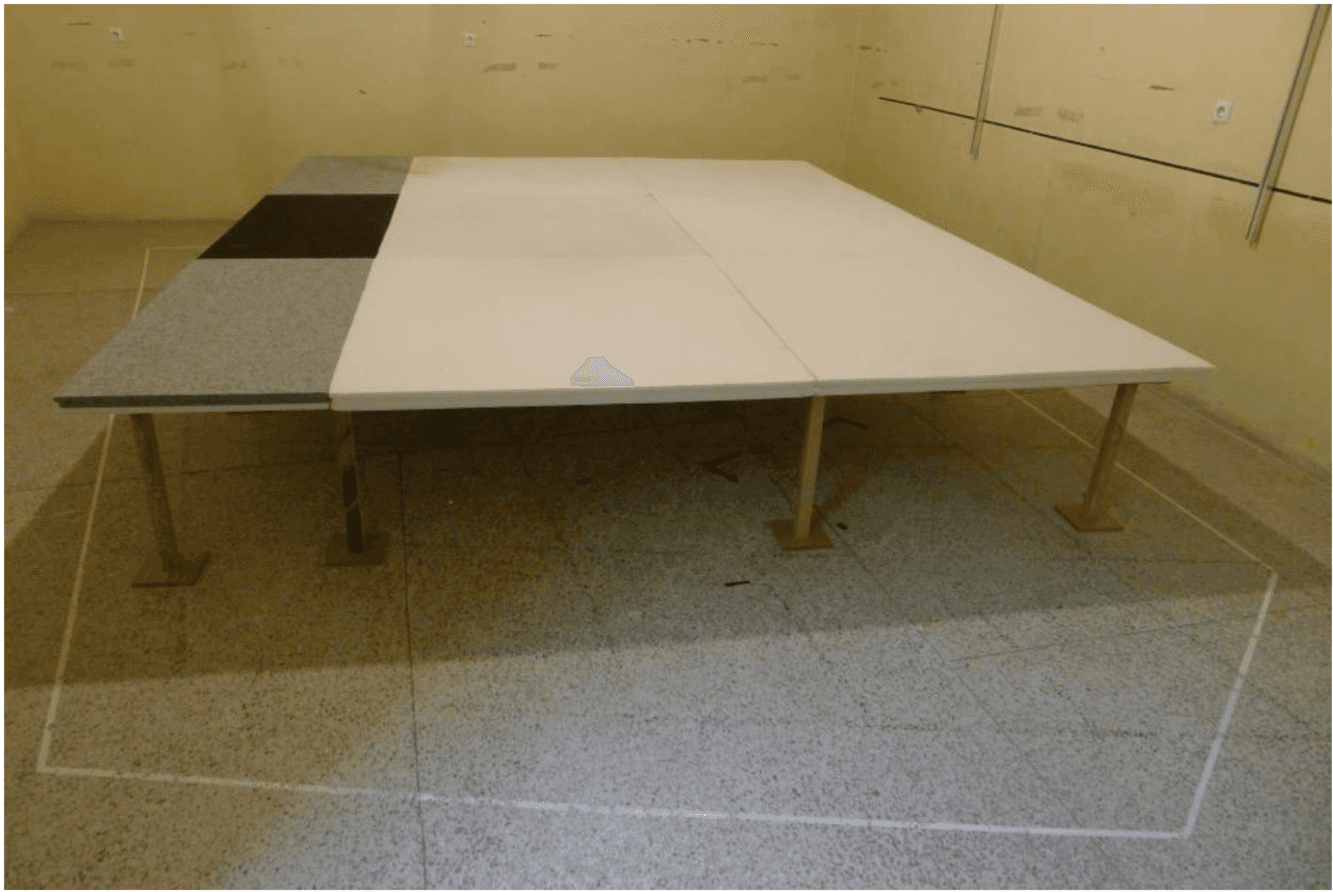
Figure 5 – Studied panel made of polyester felt PET thickness 45 mm,
installed 50 cm from the floor of the reverberation chamber.
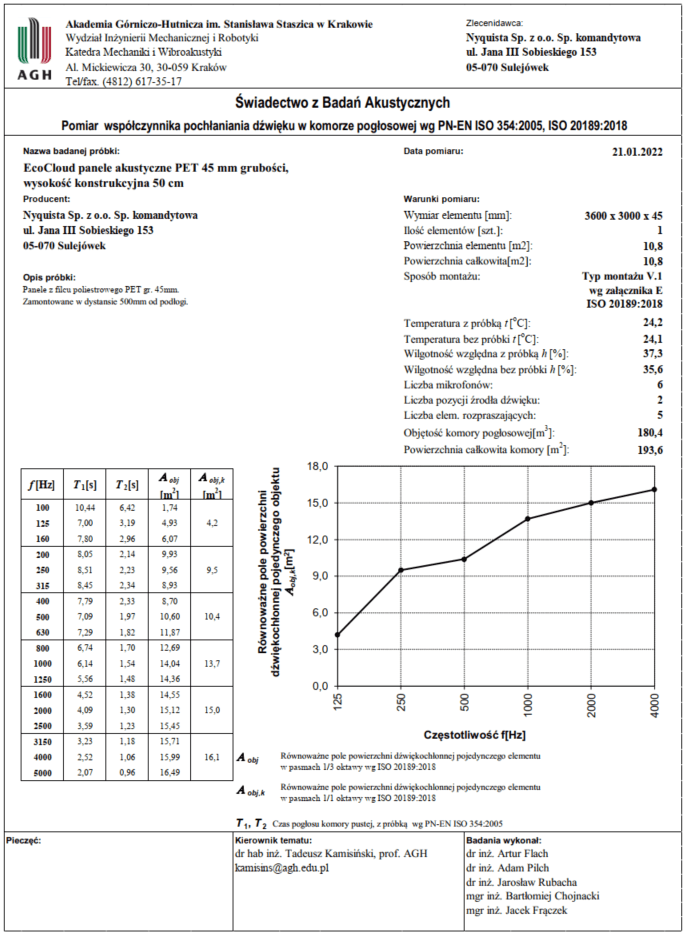
Figure 6 – Acoustic absorption test results for panels made of polyester felt PET thickness 45 mm,
installed 50 cm from the floor of the reverberation chamber.

See also

Follow us on Instagram
Office / Showroom
Production / Warehouse
Let's do something together
Use the form - we will respond as soon as possible!