Why is it so quiet in winter? A popular science perspective on the acoustics of snow
|
Nyquist Team
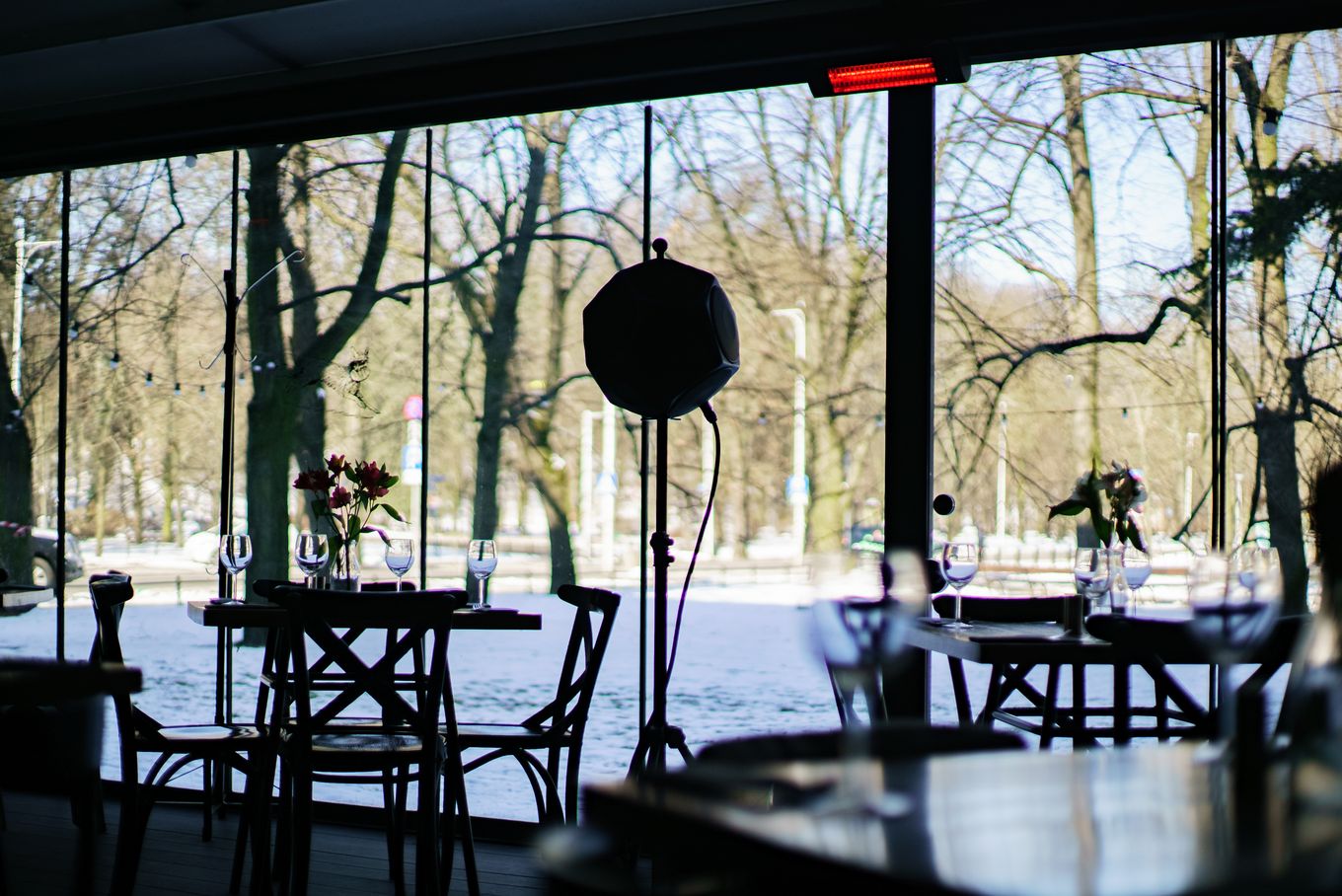
When we go outside after a night of snowfall, we often immediately notice that the world has become not only brighter but also surprisingly quiet. The sounds that usually dominate — traffic, the rumble of tires, the sound of footsteps — seem muted, softer, as if absorbed by the surroundings. This characteristic "winter hush" is not magic, but physics.
This phenomenon has very concrete scientific foundations. It turns out that snow is one of the most porous materials found in nature, and it is precisely this feature that makes it excellent at damping sound waves.
Snow like a sponge – the structure of a natural absorber
Fresh snow has an extremely loose, almost lace-like structure. Individual flakes consist of delicate, irregular ice crystals that connect to each other in a way that forms a network of microscopic spaces.
It is estimated that from 80 to even 95 percent of the volume of fresh snow is air. In practice, this means that a layer of snow functions like a natural porous material — similar in function to the foams or wools used in acoustics. When a sound wave penetrates such a structure:
It is dispersed across countless edges of the crystals.
It loses energy due to friction between the air and the ice.
This process effectively reduces the amount of sound returning to our ears as reflections.
Effectiveness at the level of professional panels?
Laboratory studies confirm the remarkable effectiveness of snow in absorbing sound waves. In measurements, the absorption coefficient of fresh, loose snow reaches values in the range of 0.5–0.9 (on a scale from 0 to 1).
What does this mean? That nature has created a material that ranks at the level of professional sound absorbers. The best effects are achieved in the higher frequency range, which is responsible, among other things, for the sharpness of sound and the perception of the noisiness of the city. That is why the winter landscape seems acoustically “soft,” and the noise from the street becomes decidedly less annoying.
How does the sound of the city change?
Covering the ground with snow changes the entire acoustic landscape. On a daily basis, a large part of the noise — particularly in urban spaces — results not only from direct sources but also from reflections off asphalt, sidewalks, or building facades.
A layer of fresh snow covering hard surfaces reduces the number of reflections and decreases the amount of acoustic energy lingering in the environment. That is partly why:
steps on snow do not sound sharp,
the sound of car engines seems more distant.
Additionally, snow dampens many mechanical sounds associated with vehicle movement — reducing tire friction on dry asphalt, eliminating harsh impacts, and limiting sound reflections between the wheels and the surface.
Not all snow dampens the same
However, it should be noted that acoustic properties depend on the condition of the snow cover. The most effective is fresh, light powder with high porosity.
As time passes, when snow is compacted, melts, or undergoes freeze-thaw cycles, its structure changes — pores disappear, and crystals bond together. Compacted or wet snow absorbs significantly less, and in extreme cases, it can act like a hard sound-reflecting surface. An even stronger effect is produced by the freezing of snow, which completely destroys its porous structure, transforming it into a material with acoustic properties similar to ice (namely concrete or glass).
The paradox of a winter night – the phenomenon of inversion
Winter acoustics also involve the influence of the atmosphere. On cold, windless nights, the phenomenon of temperature inversion often occurs, where the air near the ground is cooler than the air above.
This causes sound waves to bend toward the ground, which can increase the reach of distant sounds, such as the sound of a train or a distant road. Therefore, paradoxically, in winter it can be very quiet in close proximity (due to absorption by the snow), while simultaneously sounds from very far away are heard more clearly.
Summary
All these factors — the porosity of snow, reduced reflections, weaker mechanical noise, and unusual atmospheric conditions — contribute to the effect that we all know from experience. Snow truly changes the way the world sounds. And although this phenomenon lasts only as long as the snow is fresh and soft, it gives us one of the most beautiful forms of natural silence.
Bibliography and sources:
W. Maysenhölder, M. Rauter, H. K. Gubler, Microstructure and sound absorption of snow, “Cold Regions Science and Technology”, 2012.
J. B. Johnson, Propagation of sound above a finite layer of snow, “Journal of the Acoustical Society of America”, 1985.
T. Ishida, Acoustic Properties of Snow, Hokkaido University, 1965.
A. Capelli, F. R. Finger, M. Schneebeli, Speed and attenuation of acoustic waves in snow, 2016.
R. Sidler, A porosity-based Biot model for acoustic waves in snow, 2015.

See also

Follow us on Instagram
Office / Showroom
Production / Warehouse
Let's do something together
Use the form - we will respond as soon as possible!