
Sound absorption
|
Nyquist Team
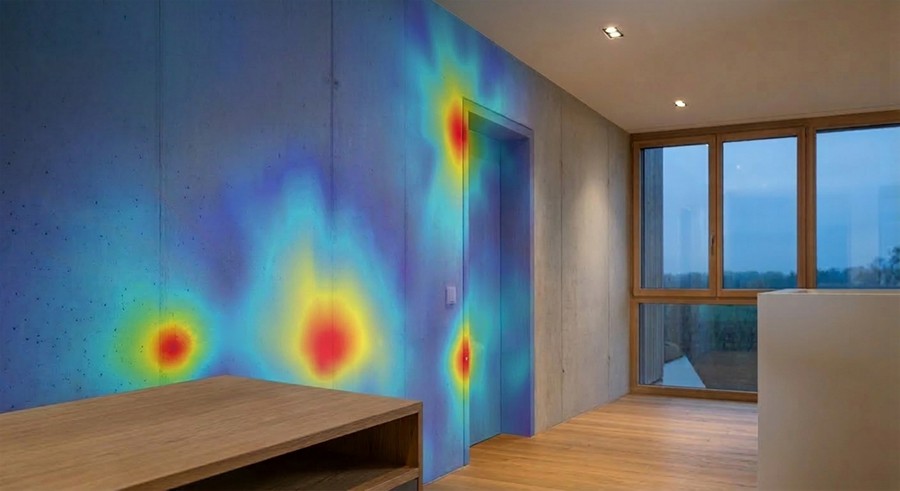
You enter an empty apartment and hear every step, but after putting in furniture and carpets, it becomes quiet and cozy. Where has the acoustic energy that was previously bouncing off the walls gone? The answer is a physical process that converts noise into... heat.
Professional Definition
Irriversible transformation of acoustic wave energy into thermal energy.
This phenomenon occurs within the structure of the material on which the sound wave strikes. As a result of the friction of air particles in the pores of the material (e.g., mineral wool, acoustic foam), the kinetic energy of the particles is converted into heat. The measure of the effectiveness of this process is the reverberation sound absorption coefficient ($\\alpha$), which takes values from 0 (total reflection) to 1 (total absorption).
Acoustics in Simple Words
Sound absorption works like a sponge for water or a brake in a car. Imagine throwing a tennis ball (sound) against a concrete wall – the ball will bounce back with nearly the same energy. This is a lack of absorption. However, if you throw the same ball into a pile of soft pillows, the ball will hit, lose momentum, and not come back to you. The energy of the throw has been “absorbed” by the pillows. Just like that, acoustic panels “capture” sound, preventing it from circulating in the room.
Summary
Sound absorption is a key mechanism in combating noise and reverberation. By using porous materials, we can control the acoustics of interiors, reducing troublesome reflections and improving speech intelligibility.

See also

Office / Showroom
Production / Warehouse
Let's do something together
Use the form - we will respond as soon as possible!