|
Nyquist Team
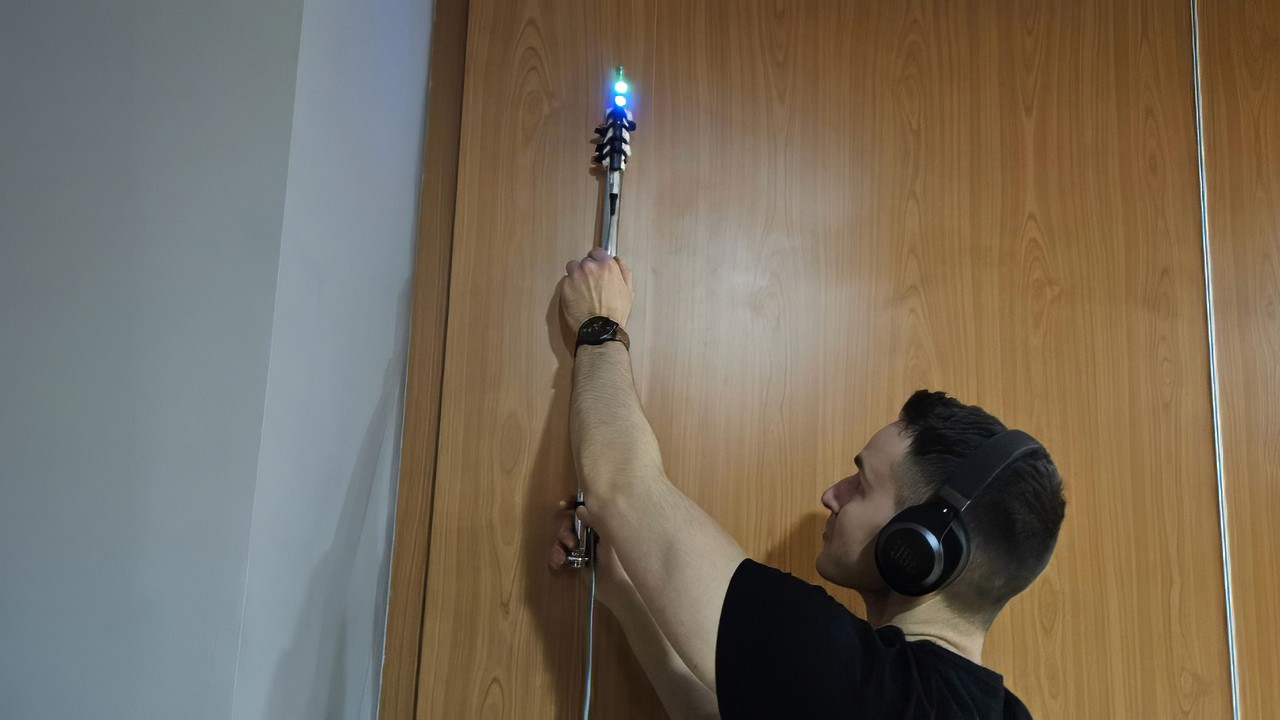
So what does such a probe actually measure? As the name suggests, a intensity probe is used to measure sound intensity, which is the amount of acoustic energy passing through a unit area along with information about the direction of its propagation. In practice, this means that it does not only show the 'noise level', but allows us to indicate specific places through which sound penetrates or from which it is emitted.
In comparison, classic sound level meters only register acoustic pressure – a scalar value expressed in decibels (dB). They inform us that there is a certain level of noise in the room, but they do not tell us where the sound energy is actually flowing.
So one can say that pressure measurement answers the question: 'how loud is it?', while intensity measurement answers the question: 'where and in which direction is the sound flowing?'.
What does intensity measurement give us?
The greatest value of this method is the ability to move from a general diagnosis to pointing out a specific problem area. Instead of the information: 'the sound insulation is too low', we receive a response such as: 'acoustic energy penetrates through the joint of the wall and the ceiling in the area of the ventilation system'. That is a fundamental difference.
Thanks to this precision, it is possible to formulate very specific repair guidelines. Instead of performing costly and intrusive solutions – for example, building additional pre-walls that reduce the room's area – it often suffices to seal a specific joint or provide adequate insulation to the specified installation. In practice, this means shorter repair times, a smaller scope of work, and lower investment costs.
The intensity method also allows:
detecting point leaks,
differentiating actual sound penetrating through the partition from reflected sounds,
reducing the influence of background noise on the measurement result,
conducting tests in real operating conditions of the facility.
As a result, it is possible to analyze even very complex acoustic systems, where classic sound level measurement does not allow for a clear identification of the source of the problem.
What does the acoustic insulation measurement of a wall from airborne sounds look like using the pressure method?
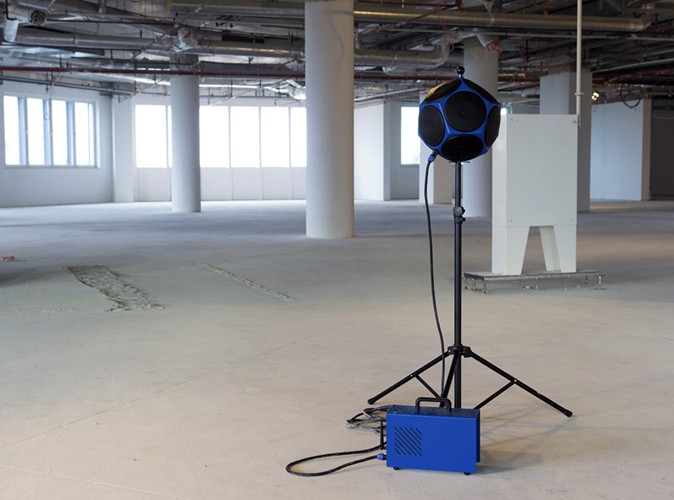
We conduct the airborne sound insulation test according to PN-EN ISO 16283-1. In the emitting room, a controlled acoustic signal is generated – most often pink noise – which evenly excites the partition over a wide frequency range. In the receiving room, sound level and reverberation time measurements are performed.
Why do we measure reverberation time? Because the amount of energy 'remaining' in the room influences the final insulation result. For the result to be valid, the acoustic conditions in the receiving room must be taken into account.
During measurements, the following are determined:
R’w – weighted indicator of the approximate proper acoustic insulation,
R’A1, R’A2 – taking into account the spectral adaptive indicators C and Ctr,
LAeq, LAmax – sound levels,
RT30 – reverberation time in the receiving room.
After the measurements, an analysis is conducted according to PN-B-02151-3, including verification of project documentation, assessment of compliance with regulatory requirements, and preparation of potential repair guidelines.
The final effect is a specific numerical value of the insulation of the partition, which allows us to answer the question: whether the wall meets regulatory requirements or not.
And here arises a significant limitation of this method – although it accurately determines the level of insulation, it does not unequivocally indicate where the acoustic energy penetrates. It informs about the effect but does not always allow for identifying the cause of the problem.
How do we locate acoustic bridges in practice?
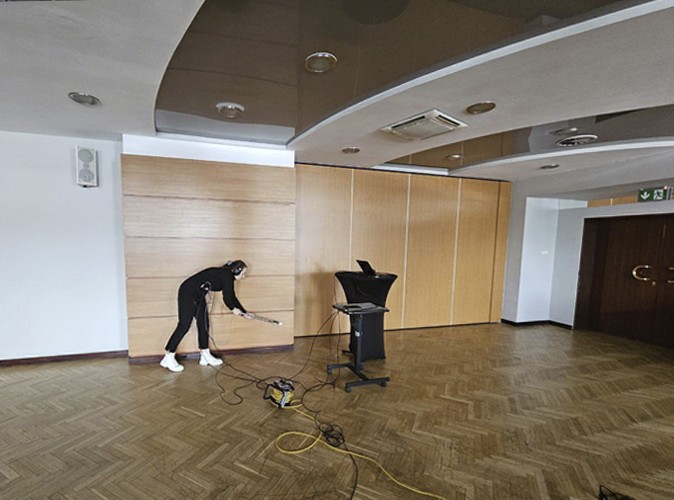
The PU intensity probe allows for performing point or scanned sound intensity measurements right at the surface of the partition. Unlike the classic measurement 'in the room', here we examine what happens right at the wall.
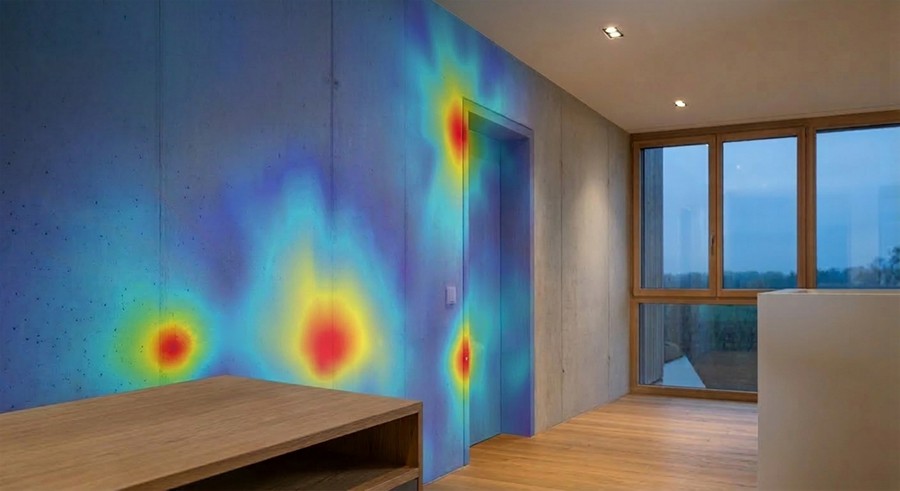
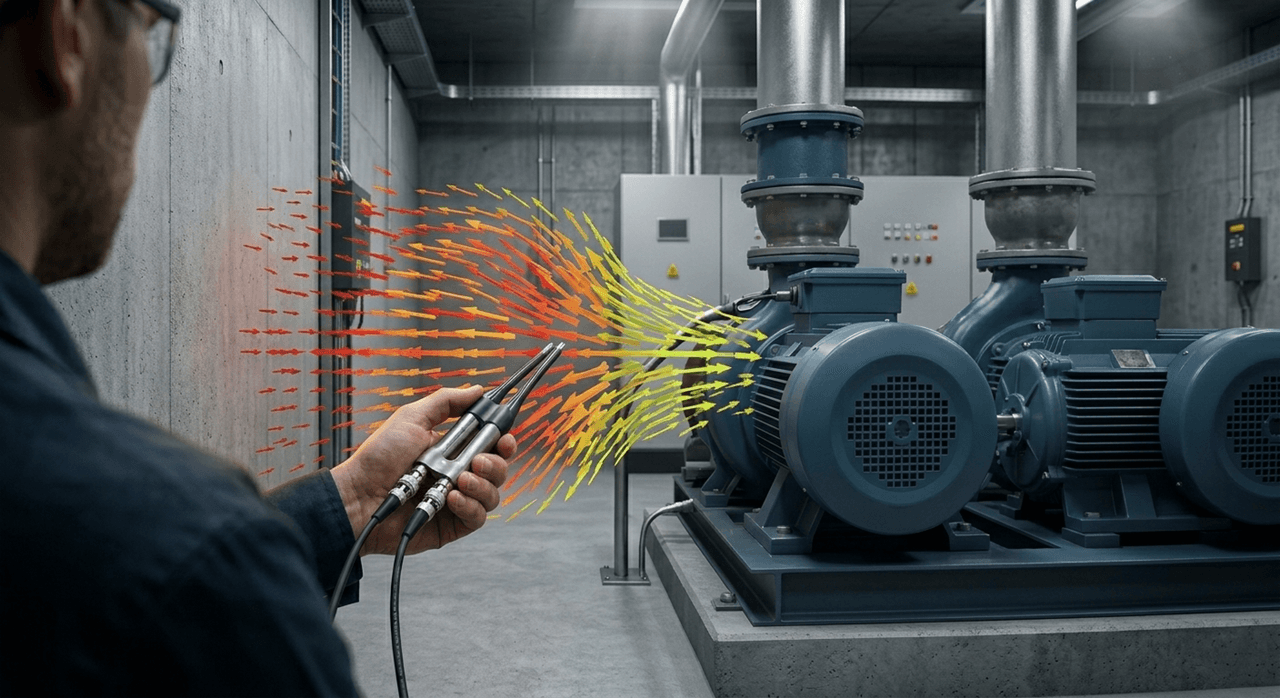
In practice, the measurement involves slowly, orderly moving the probe across the surface of the partition – similar to examining with a thermal imaging camera. The device records not only the level of acoustic energy but also the direction of its flow.
This allows us to:
locate acoustic bridges,
detect installation leaks,
identify areas of different construction or stiffness,
determine the extent to which a given place affects the resulting insulation of the partition.
The result of the measurement is a map of sound intensity distribution – a graphical representation of areas, in the form of a colored map of acoustic velocity distribution, through which acoustic energy actually penetrates through the partition. This tool is particularly effective for diagnosing:
structural joints,
installation passages,
joints of walls and ceilings,
areas around door and window joinery.
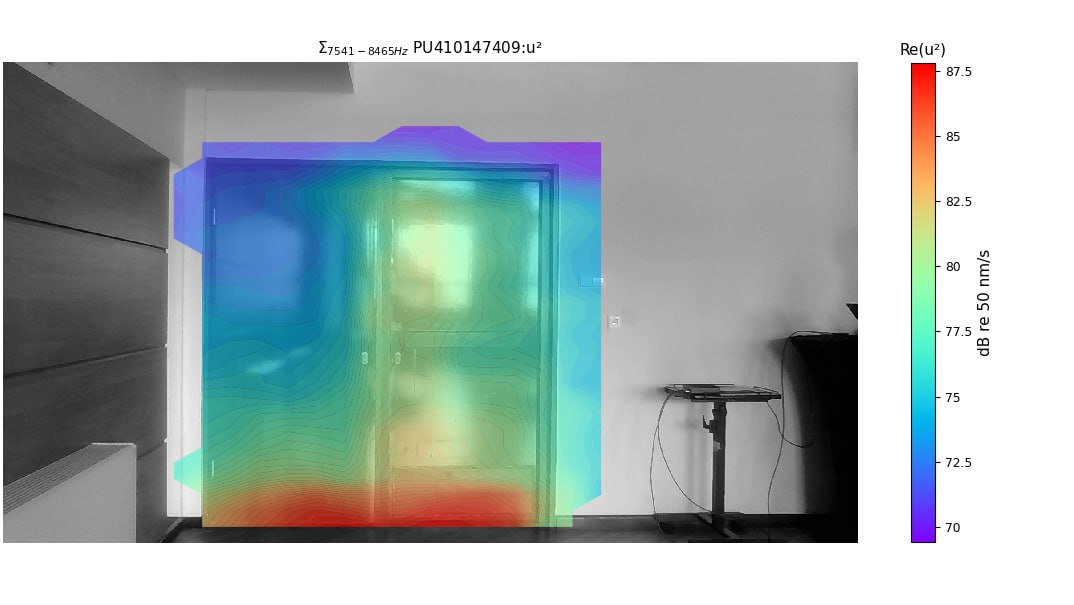
It is exactly in these places that acoustic bridges, which can determine non-compliance with insulation requirements, most often occur, even though the partition itself has been designed correctly.
How to apply intensity methods in studying the acoustic characteristics of technical devices?
The acoustic parameter describing the operating characteristics of technical devices is the acoustic power level, LW. This unit defines the total acoustic energy emitted by the source (e.g., a heat pump) over a unit of time. Unlike sound pressure level, which depends on distance and room conditions, the acoustic power level describes the device itself – regardless of the measurement location. One could say that it is the equivalent of 'the power of a light bulb', not the brightness of light at a specific point in the room.
This parameter is crucial for:
designing production halls,
analyzing the propagation of sound in space,
assessing compliance of devices with environmental requirements.
Not every manufacturer provides the acoustic power level; therefore, it is often necessary to determine it through measurement.
There are three basic measurement methods:
Measurement in an anechoic chamber – according to PN-EN ISO 3745 (highest accuracy, laboratory conditions)
Measurement using the pressure method in situ – according to PN-EN ISO 3746 (lower accuracy, greater sensitivity to hall conditions).
Measurement using the intensity method in situ – based on PN-EN ISO 9614.
It is indeed the third method that is often the optimal solution for the industry.
The following table shows that the intensity method is particularly effective in production conditions, where both accuracy and continuity of operation matter.
Method | Advantages | Disadvantages |
1. |
|
|
2. |
|
|
3. |
|
|
In practice, this means that the PN-EN ISO 9614 method is often the only solution that allows obtaining a reliable result without halting production.
This method enables the determination of the acoustic power level of the device without the need for an anechoic chamber. Importantly, it does not require a complete shutdown of other devices in the production hall, which significantly reduces costs associated with downtime.
The measurement proceeds in several stages:
a so-called measurement surface is defined around the device (a closed contour surrounding the machine),
this surface is divided into measurement elements,
sound intensity measurements are performed using point or scanning methods,
quality criteria are verified (influence of background noise, uncertainty, stability of the field).
In practice, this means that we create an 'imaginary volume' surrounding the device and measure the flow of acoustic energy 'leaking' through its surface. Based on the recorded flow of energy, the acoustic power level of the device is calculated.
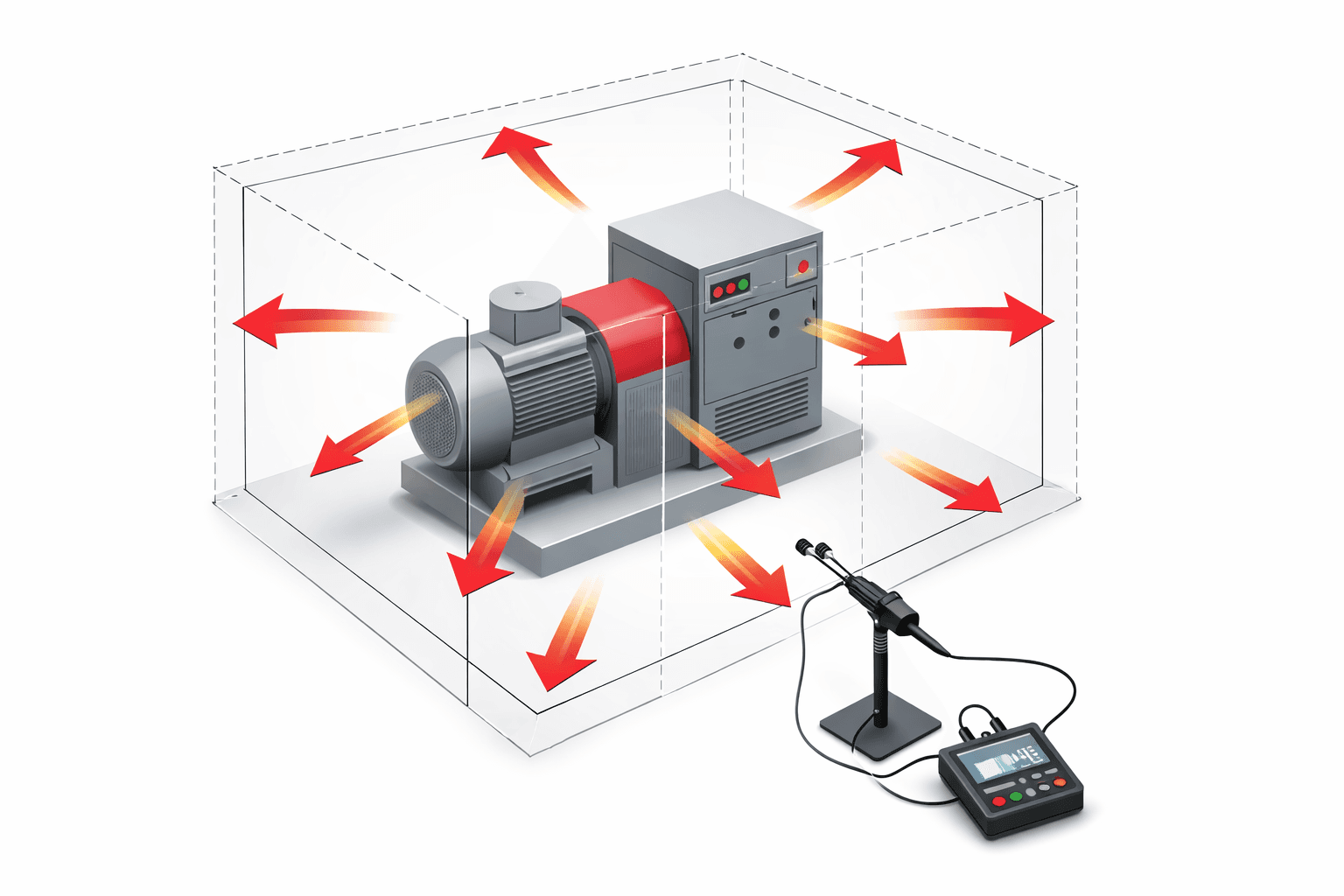
An additional, very significant advantage of this method is the ability to precisely identify elements of the machine generating the most noise – which is not possible with methods based solely on measuring acoustic pressure.
In industrial practice, measurements of the reverberation time of the hall (RT20, RT30) are often also performed to characterize the acoustic conditions of the production space and correctly interpret the results.
It's often the case that building users hear noise or feel 'sound leakage', but are unable to identify its actual source. In many cases, the problem does not stem from the partition itself, but from lateral propagation paths – through ceilings, installations, mounting gaps, or structural details. In such situations, the intensity method allows moving from guesses to precise location.
The intensity probe allows for connecting headphones and listening to the amplified signal of both acoustic pressure and acoustic velocity. This means that the operator 'hears' the actual flow of acoustic energy at a given point on the partition. In practice, this results in significantly greater sensitivity and directionality than with ordinary organoleptic listening. Instead of a general impression that 'something can be heard somewhere here', it is possible to very precisely indicate the spot where sound energy actually penetrates.
The testing procedure usually includes:
preliminary listening to narrow down the problematic area,
detailed scanning of selected parts of the partition,
visualization of sound intensity distribution,
identification of areas requiring corrections to structural details.
Only in the areas of the greatest leaks are accurate scanning measurements performed, based on which specific repair guidelines are formulated.
Summary - why is the intensity method so effective?
Classic sound level measurement answers the question: 'How loud is it in a given place?' The intensity method answers the question: 'From where and through which way is the acoustic energy flowing?'. This difference changes the way acoustic diagnostics are conducted.
Thanks to the intensity method, we can:
precisely locate acoustic bridges,
assess the quality of partitions,
verify the correctness of installation,
determine the actual acoustic power of devices,
develop effective, targeted repair solutions instead of costly 'blind' actions.
It is the ability to indicate a specific spot of energy flow that makes the intensity method such an effective diagnostic tool – both in construction and in industry.
Every study ends with the development of a detailed report, which includes:
description of the facility and measurement conditions,
list of the equipment used,
reference to applicable standards,
measurement results along with analysis
precise technical recommendations concerning the elimination of the identified problem.
As a result, the investor or facility manager receives not only a diagnosis but also concrete, technically justified guidelines for further actions.

See also
Office / Showroom
Production / Warehouse
Let's do something together
Use the form - we will respond as soon as possible!